
Last updated November 15, 2026
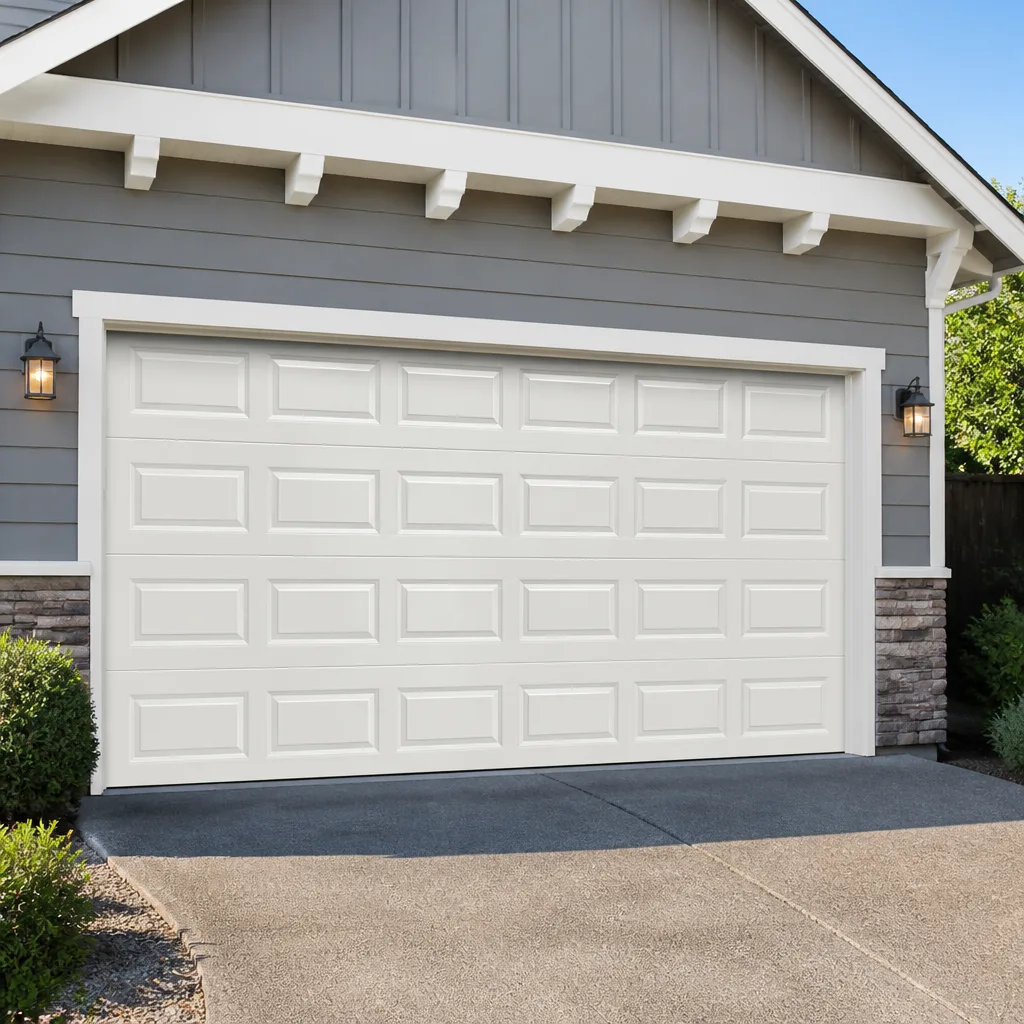 Raised-panel steel
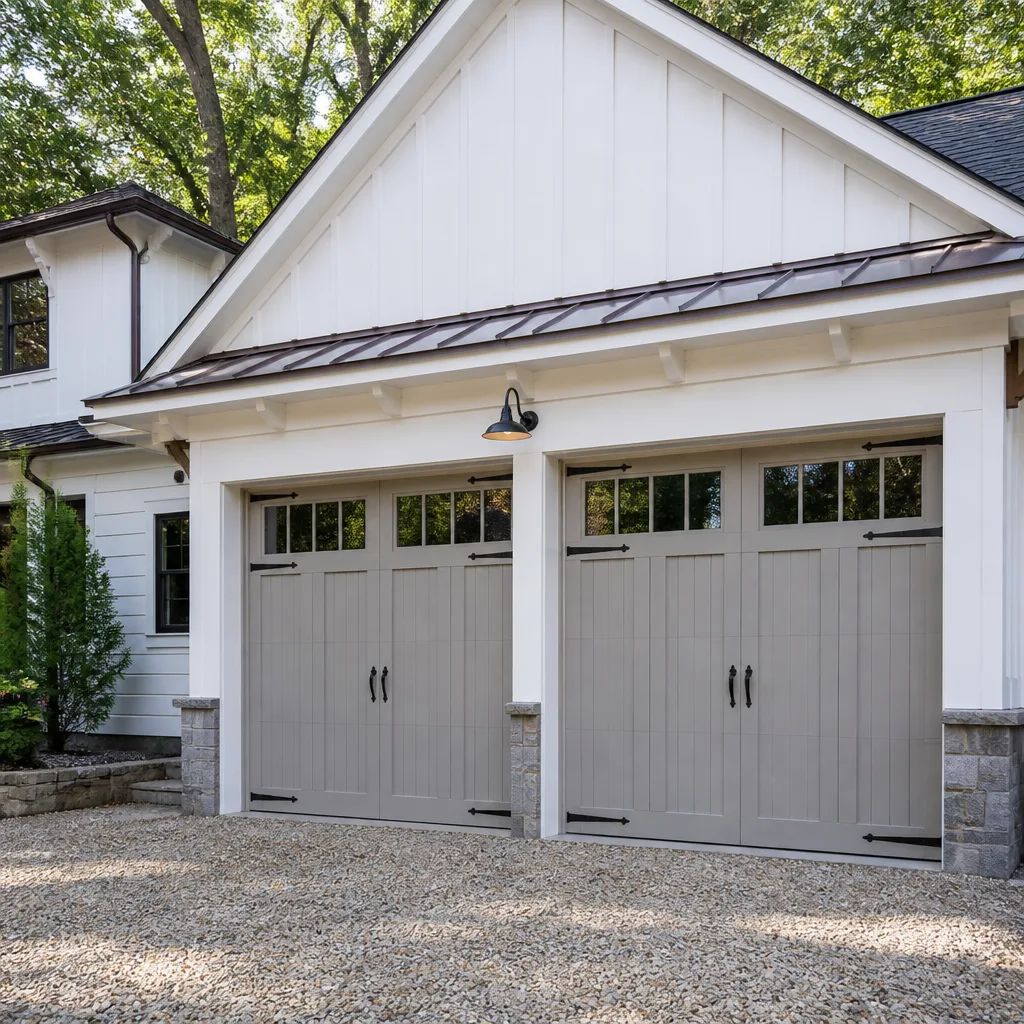 Carriage house
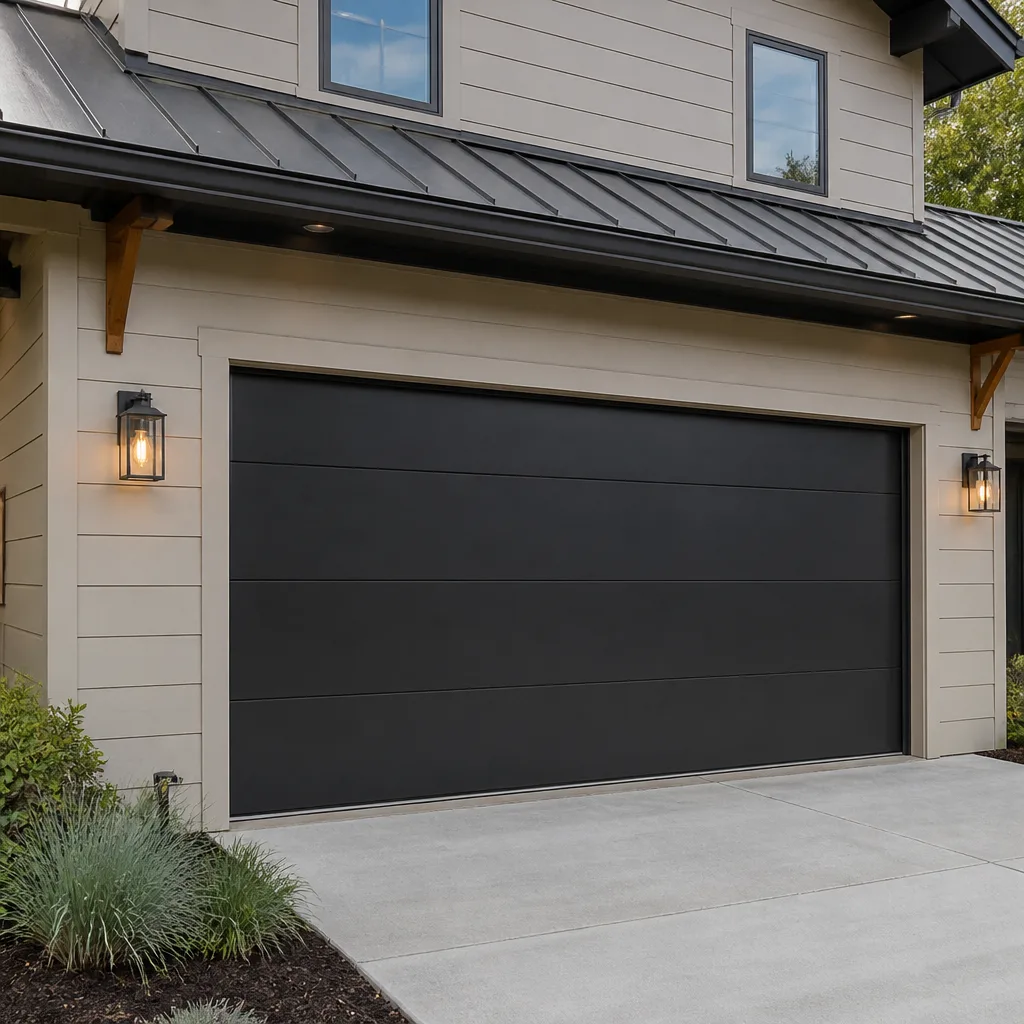 Modern flush
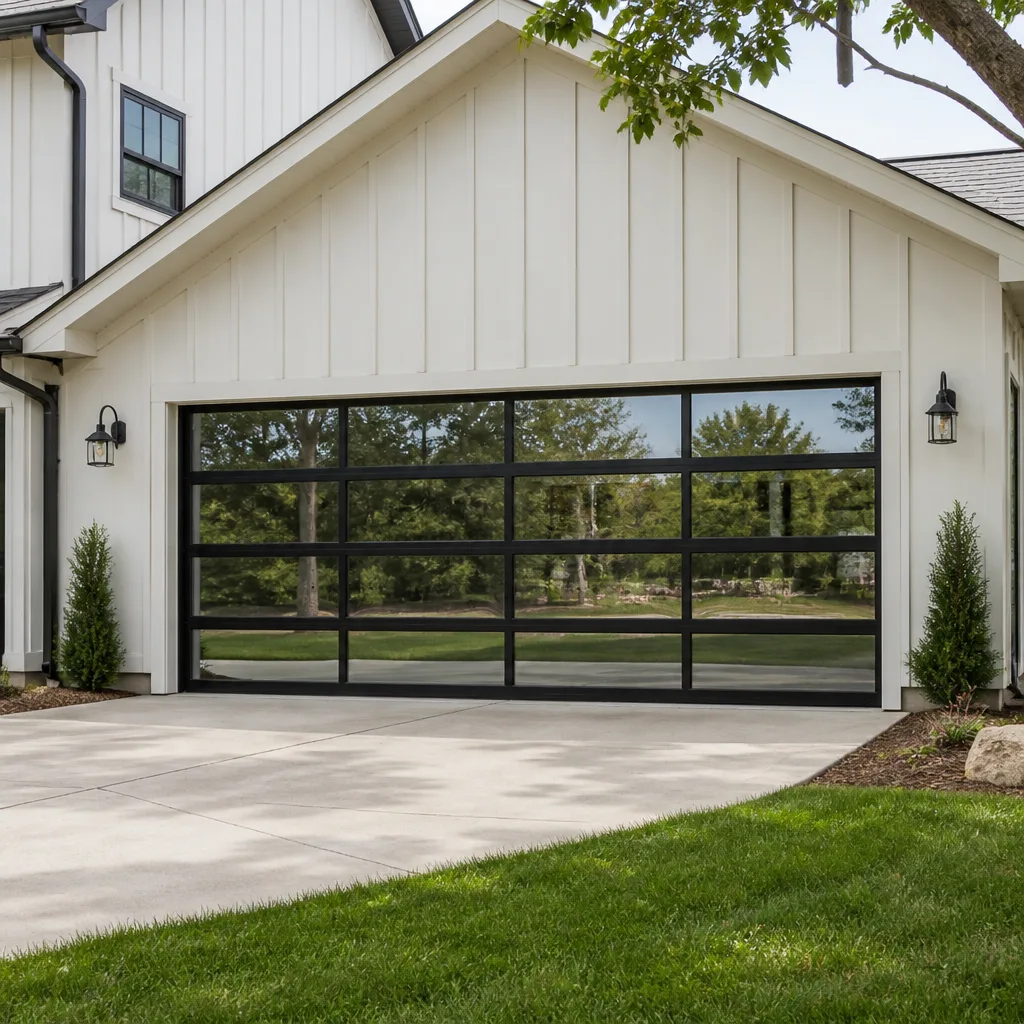 Full-view glass
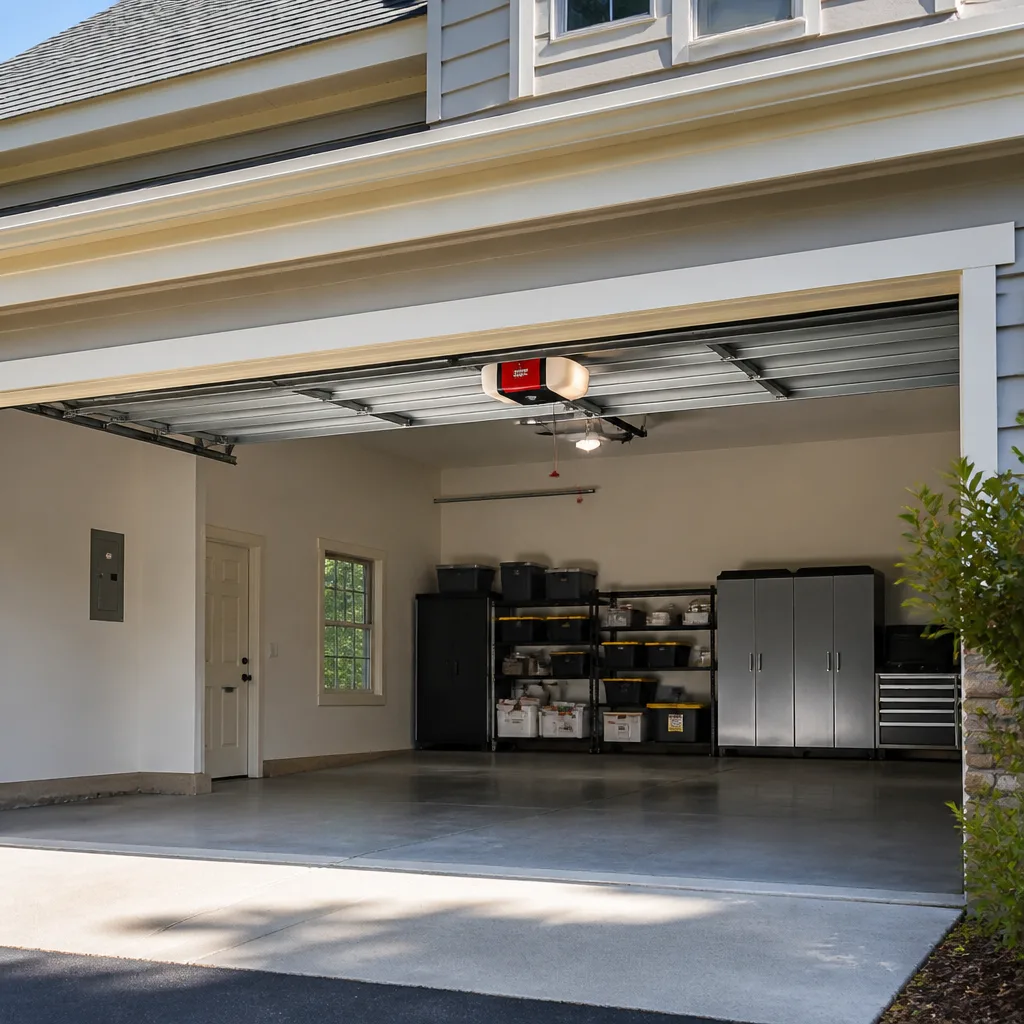 LiftMaster openers
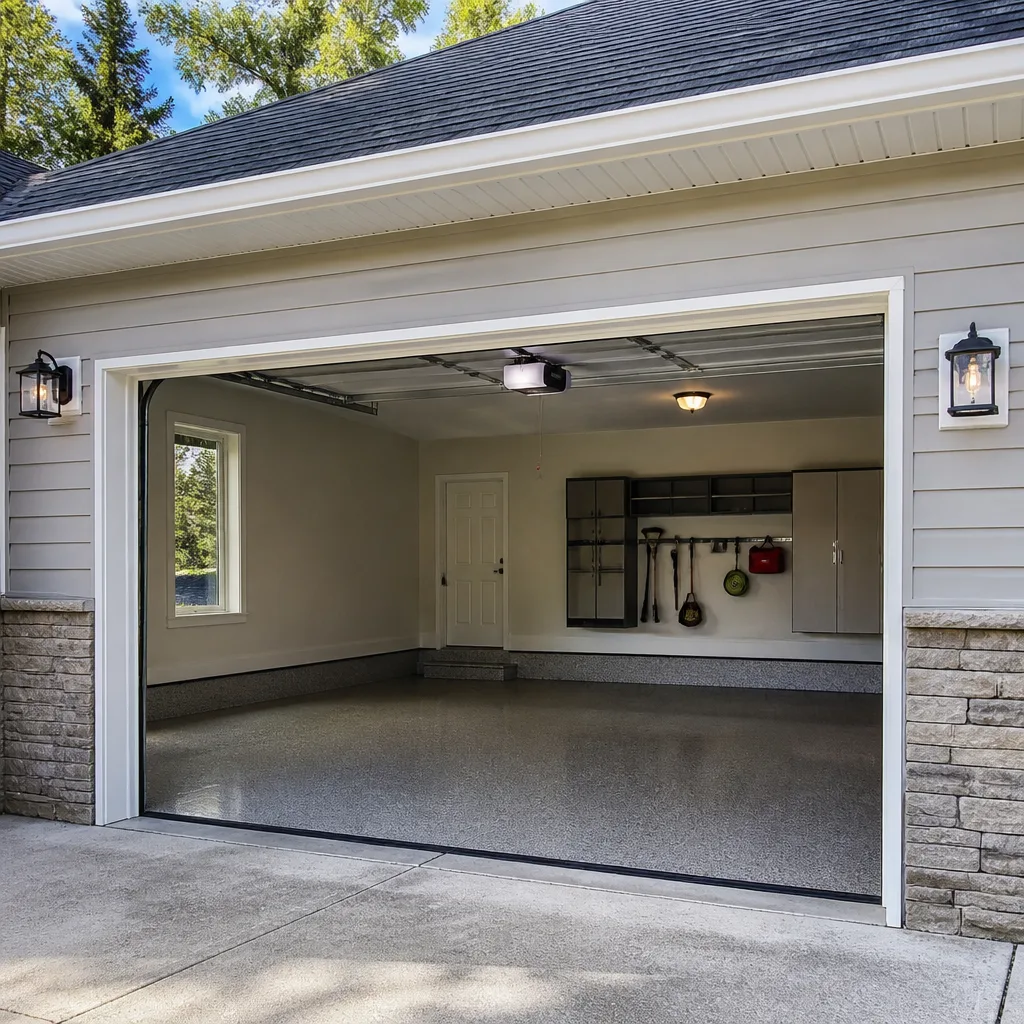 Chamberlain openers
Full 25-point door and opener safety check with every visit - springs, cables, rollers, tracks, and your LiftMaster or Chamberlain opener included
You get a price before we start. It does not change when the pro arrives.
Get your free estimateGarage Door Repair Troubleshooting in Bakersfield: Common Problems and How to Fix Them
A door that reverses before it closes and a door that won’t move at all look like two different emergencies. They’re not diagnosed from the same starting point, though, and mixing up the process wastes time – and on some openers, it can void the warranty. Most garage door problems in Bakersfield fall into one of five diagnosable patterns. Once you match the symptom to the pattern, you know whether you’re looking at a ten-minute fix or a job that needs a trained hand and the right parts. This guide walks you through each pattern, tells you what’s safe to check yourself, and shows you what to document before you call anyone.
Quick Answer
Garage door troubleshooting starts with the symptom, not the part. A door that reverses usually has a photo-eye or limit switch issue, a door that grinds usually has a roller or track problem, and a door that won’t respond at all is usually an opener or power problem before it’s ever a door problem. Torsion springs, cables under tension, and any electrical panel work are not DIY territory – those need a trained technician. Everything else you can safely check in about five minutes before you decide whether to call.
Styles & brands we work with
- Raised-panel steel
- Carriage house
- Modern flush
- Full-view glass
- LiftMaster openers
- Chamberlain openers
Table of Contents
- The Five Diagnostic Patterns of a Failing Garage Door
- Why Your Door Reverses Before It Closes
- Grinding, Squealing, and Scraping Noises
- When the Door Won’t Respond at All
- Doors That Open Crooked or Move Slowly
- How Bakersfield Heat Changes the Failure Pattern
- Safe DIY Checks vs. Jobs for a Trained Technician
- What to Document Before You Call
The Five Diagnostic Patterns of a Failing Garage Door
Before you touch anything, figure out which of these five behaviors you’re seeing. It saves you from diagnosing the wrong component and it makes the conversation with a technician shorter.
- The door reverses before it closes. Almost always a safety sensor or limit switch issue. Rarely mechanical.
- The door grinds, squeals, or scrapes when it moves. Rollers, hinges, or track alignment. Sometimes the opener’s drive gear.
- The door won’t respond to the remote or wall button. Power, remote battery, or opener logic board. The door itself is usually fine.
- The door opens crooked or moves slowly. Cable tension, spring balance, or a bound track. This one has the highest chance of being a real mechanical problem.
- The door closes partway and stops, or opens partway and stops. Travel limits, force settings, or an obstruction the opener thinks it’s hitting.
Each pattern points to a specific set of components. A technician who knows which pattern you’re describing can often bring the right parts on the first visit instead of scheduling a second trip. In our experience working across Bakersfield, that’s the difference between a repair that happens the same day and one that stretches into the next week.
One thing that trips up homeowners: two patterns can overlap. A door that opens crooked can also trigger the reverse-before-close behavior because the safety sensors see something out of alignment. When that happens, the crooked movement is the primary issue and the reversing is a symptom of it. Fix the primary issue first.
Why Your Door Reverses Before It Closes
A garage door that reverses before it closes is almost always responding to its safety system. The opener thinks something is in the way, so it backs off. There are three components that cause this, and two of them you can check yourself in under five minutes.
- Photo-eye sensors. These are the two small lenses mounted at the bottom of the tracks on either side of the door. If they’re misaligned, dusty, or blocked by a cobweb or a stray leaf, the opener won’t close the door. Wipe the lenses and check that the indicator light on each sensor is solid, not blinking.
- The limit switch. This tells the opener how far down to travel. If the limit is set too high, the door reverses before it reaches the floor because the opener thinks it’s hit an obstruction. This is an adjustment, not a repair, but on older openers the limit screw can be fussy to dial in.
- A physical obstruction. Check the track for debris, a loose roller, or something the door is binding on. A door that binds going down triggers the same safety reversal as a blocked sensor.
If the sensors are clean and aligned and the track is clear, and the door still reverses, the limit switch is the next suspect. This is where a lot of online tutorials go wrong. The adjustment is simple on a Chamberlain or a Genie opener with a clear limit screw, but the exact procedure varies by model – and getting it wrong on a LiftMaster with the newer logic boards can throw the opener into a fault state that requires a reset sequence most homeowners don’t know. If your garage door opener repair question is “why does my door reverse,” and the sensor check didn’t fix it, that’s the point to call.
One Bakersfield-specific note: summer heat softens the rubber bottom seal on many doors. When that seal sags or warps, it can push against the floor slightly and trigger the reverse. It looks like a sensor problem but it’s a seal problem. A quick check is to watch the bottom seal as the door comes down – if it touches the floor and then the door reverses, the seal is likely the cause.
Grinding, Squealing, and Scraping Noises
Noise is your door telling you exactly which component is wearing out. The type of noise narrows it down faster than anything else.
- Grinding usually means worn metal rollers or a drive gear inside the opener. On a chain-drive opener, a grinding sound when the door moves but the door doesn’t actually travel is often the drive gear stripping.
- Squealing is almost always a lubrication issue – hinges, rollers, and the torsion spring winding bars. A dry torsion spring will squeal loudly, especially in the dry heat.
- Scraping usually means a track problem. The door is dragging against the track on one side, either because the door is out of square or because the track has been bumped or bent.
- Popping or banging can be a torsion spring about to fail. If you hear a loud pop and the door won’t lift, stop and don’t force it – that’s a spring break, and it’s dangerous to keep running the opener.
Lubrication on rollers and hinges is a legitimate homeowner task. Use a garage door lubricant, not WD-40, on the hinges, rollers, and the torsion spring if it’s accessible from the ground without reaching over your head. If the squeal is coming from above head height or from the spring itself, leave it – reaching into a torsion spring assembly is how people get hurt. That component is stored under tension and can cause serious injury if it releases unexpectedly.
The scraping case deserves a separate note because Bakersfield’s older housing stock – the 1970s to 1990s single-car garages that make up a lot of the neighborhoods off Chester Avenue, Union Avenue, and the older parts of Oildale – has specific quirks. Many of those doors were installed with lighter track than modern doors use, and the track brackets are mounted to framing that has expanded and contracted through fifty summers of heat. A door that scrapes in those garages is often a track that has slowly moved out of alignment rather than a bent track. The fix is a track realignment, not a track replacement, and a technician who has worked on those door styles will recognize it the moment they see it.
When the Door Won’t Respond at All
A garage door that won’t respond to the remote or the wall button is usually an opener problem, not a door problem. Work through these in order before assuming the worst.
- Check the power. Is the opener plugged in? Is the outlet live? A tripped GFCI or a loose plug in the ceiling outlet is more common than you’d think. Also check the breaker panel.
- Check the remote battery. If the wall button works but the remote doesn’t, it’s the remote. Replace the battery and re-pair the remote if the opener requires it.
- Try the wall button. If neither responds, the opener itself isn’t getting signal or isn’t getting power.
- Look for a lock-out mode. Some openers have a vacation lock or a lockout feature that disables the remote. A wall button that works while the remote doesn’t, with a fresh battery, is often this.
- Check the safety sensors again. If the sensors are blocked, the opener won’t close the door but will usually still open it. A door that won’t open at all is rarely a sensor issue.
If none of that resolves it, the problem is inside the opener – the logic board, the capacitor, or the drive motor. That’s a technician job, and it’s one that benefits from someone who knows the specific brand. A Chamberlain with a Wi-Fi module and a Genie with a legacy chain drive have almost nothing in common inside the housing, and the diagnosis paths diverge quickly. Parts are brand-specific. A generic workaround on a Clopay door and a LiftMaster opener combination is a waste of time; a technician trained on that equipment goes straight to the right component.
One warning about the safety sensors: the sensor lenses are low voltage and safe to touch, but the wiring that runs from the sensors back to the opener and the opener’s internal terminals carry line voltage. Don’t disconnect sensor wiring to “test” it unless you’re comfortable with electrical work. If the sensors appear misaligned, adjust the mounting bracket, not the wiring.
Doors That Open Crooked or Move Slowly
A crooked door – one side clearly higher than the other – is the one pattern that’s almost always a real mechanical issue rather than a settings problem. It’s also the one where forcing the door can turn a small repair into a large one.
The most likely causes, in order:
- A broken or weakening torsion spring on one side. If the door has two springs and one has broken, the remaining spring can’t lift the door evenly. The door will still move, but it will bind and go crooked.
- A frayed or slack cable on one side. Cables come off their drums or lose tension, and the door loses its balance. Cables are under extreme tension and are not safe to touch.
- A bound track on one side. A track that’s been bumped or has slipped can drag one side of the door. This one is sometimes visible – look at the gap between the roller and the track on both sides.
- A door that’s been out of balance for a while. A door that needs help lifting or drops too fast is out of balance. Left alone, an unbalanced door works one side of the opener harder and eventually damages the drive mechanism.
Slow movement is usually the opener running out of force, either because the door is binding or because the opener itself is aging. A door that used to move quickly and now crawls is often a sign that the door is out of balance and the opener is compensating. The right fix is to rebalance the door, not to crank up the force setting – raising the force on a binding door masks the problem and accelerates wear on the opener.
This is the section where we’ll say it plainly: if your door is opening crooked, don’t run it repeatedly. Get it looked at. The springs and cables should be handled by someone with the training and the tools. A garage door spring carries hundreds of pounds of tension. A cable that releases or a spring that lets go can cause serious injury. That’s not a scare tactic – it’s the reason professionals use winding bars, wear protection, and follow a specific sequence for every spring and cable job.
How Bakersfield Heat Changes the Failure Pattern
The symptoms you’re seeing in July are probably not the symptoms you’d see in January. Bakersfield’s summer heat does specific things to specific components, and it shifts which of the five patterns you’ll run into most often.
The rubber bottom seal is the first thing to go. UV exposure and 100-plus degree days break down the rubber over a few seasons. A hardened, cracked, or warped seal stops sealing properly, which lets heat and dust in and lets cold air out. It also changes how the door sits against the floor, and a sagging seal can trigger the reverse-before-close pattern described earlier. If your door reverses in late afternoon but closes fine in the morning, the seal is the first thing to check.
Wooden panels dry out and move. If you have an older wood door, the panels can shrink and swell with the seasonal humidity swings. Swollen panels push against the frame and cause scrapping and binding that looks like a track problem. Sun-bleached panels also weaken, and a panel that’s been UV-degraded can crack. On a Clopay or an Amarr steel door, this shows up as fading and paint failure before it shows up as a structural problem, so steel panels hold up better to the heat but still need the finish maintained.
Opener capacitors wear faster. A garage gets hot in the afternoon and cools at night, and that thermal cycling is hard on the electrolytic capacitors inside the opener. A Genie or Chamberlain opener that’s several years old and starts acting unreliable in the middle of summer is often a capacitor issue, not a logic board failure. The two look similar from the outside; a technician can tell them apart in minutes.
Track alignment shifts. Metal expands in the heat. A track that was snug in winter can shift a fraction of an inch in summer, which is enough to cause a scrape or a binding roller. This is especially common on doors that face west, where the afternoon sun hits the door and the wall it’s mounted to directly.
The practical takeaway: if a door problem shows up in the middle of summer and it’s a behavior that comes and goes, suspect a heat-related component first. Seal, opener capacitor, and track expansion cause more “ghost” problems in Bakersfield than anything else.
Safe DIY Checks vs. Jobs for a Trained Technician
This is the line that matters most. Some garage door checks are safe, quick, and worth doing before you call. Others are genuinely dangerous and should never be a homeowner task.
Safe to check yourself:
- Photo-eye alignment – wipe the lenses and confirm the indicator lights are solid
- Remote battery replacement and remote re-pairing
- Opener power – outlet, plug, and breaker
- Visual track inspection – look for obvious damage or debris without touching the hardware
- Lubrication of hinges, rollers, and accessible track points with garage door lubricant
- Listening for where a noise comes from and noting it
Leave to a trained technician:
- Torsion spring repair, replacement, or adjustment – springs are under hundreds of pounds of tension and can cause serious injury
- Extension spring replacement – same tension risk, different geometry
- Cable repair or replacement – cables are under extreme tension and a snapped cable can be lethal
- Roller replacement on doors that require disassembly
- Track replacement or realignment that involves loosening the track brackets
- Opener logic board, capacitor, or drive gear diagnosis and repair
- Any work on the electrical panel or the opener’s internal wiring
- Panel replacement on a door that requires rebalancing afterward
A good technician will tell you the same thing: the springs and cables are the reason this trade exists as a licensed profession rather than a handyman task. A limit switch adjustment isn’t in the same category. A remote battery isn’t in the same category. The line is clear once you know where it is, and everything above it is a call.
When the job does need a technician, the advantage of working with someone trained on the specific brand is real. A Raynor door with a Raynor torsion system isn’t the same as a Wayne Dalton with a TorqueMaster. A technician who knows the manufacturer’s actual specifications will work with the right components instead of improvising. That’s what brand-matched expertise means in practice – fewer return trips, fewer workarounds, and a repair that holds.
What to Document Before You Call
You can cut a diagnosis call down by several minutes and skip a whole exploratory visit if you have the right information ready. Here’s what to have on hand.
- The exact symptom. Not “it’s broken” – “it reverses about six inches before it closes” or “it grinds for two seconds when it starts up.”
- Which of the five patterns it matches. If you’ve read this far, you probably know.
- When it started. Same day? Same week? Since the last heat wave? Since the last windy day?
- Whether it’s constant or intermittent. “It happens every time” and “it happens once in a while” lead to different diagnoses.
- Whether it’s affected by temperature. Does it do it in the morning and not the afternoon, or vice versa? That’s a strong signal.
- The door brand and the opener brand. Clopay, Amarr, Chamberlain, Genie – the model name or number if it’s on the label.
- What you’ve already checked. If you’ve cleaned the sensors and checked the remote battery, say so. It keeps the technician from repeating work.
- Whether the door has been hit or bumped. A car bumper that tapped the door, a ladder that slipped, a kid’s bike that leaned against the track – all of it matters.
A technician with that information in hand can walk in knowing what to check first. Instead of spending the first ten minutes of a visit on discovery, they’re working on the actual fix. That’s why a well-documented call is worth more than a fast one.
Common Mistakes to Avoid
- Spraying the torsion spring with WD-40 to stop a squeal. WD-40 isn’t a lubricant, and on a torsion spring it attracts dust that accelerates wear. Use a proper garage door lubricant, and if the spring is above head height, leave it alone.
- Turning up the opener force setting to compensate for a binding door. This masks the problem and works the opener harder until the drive gear fails. The right fix is to find the binding, not to give the opener more power.
- Disconnecting the photo-eye sensors to “test” the door. Disabled safety sensors are a serious safety problem, especially in homes with kids or pets. If the sensors are the issue, fix them or call someone – don’t bypass them.
- Following a generic online tutorial on a brand-specific opener. A Chamberlain logic board and a Genie logic board don’t behave the same way. The steps in a generic video can put the opener into an unresponsive state that takes a service call to reset.
- Assuming a crooked door is a track problem. Track alignment causes a crooked door less often than a broken spring or a slack cable does, and forcing the door on a broken spring enlarges the repair.
- Waiting until the door fails completely to have it looked at. A door that reverses occasionally, grinds a little, or moves slowly is telling you something. Small repairs cost less than a door that’s been forced through a month of daily strain.
- Assuming Bakersfield’s heat can’t be the cause. A seal that’s hardened, a panel that’s swollen, or an opener capacitor that’s failing all show up as “it just started happening” problems in the middle of summer. If the timing lines up with the heat, that’s a clue.
See the difference
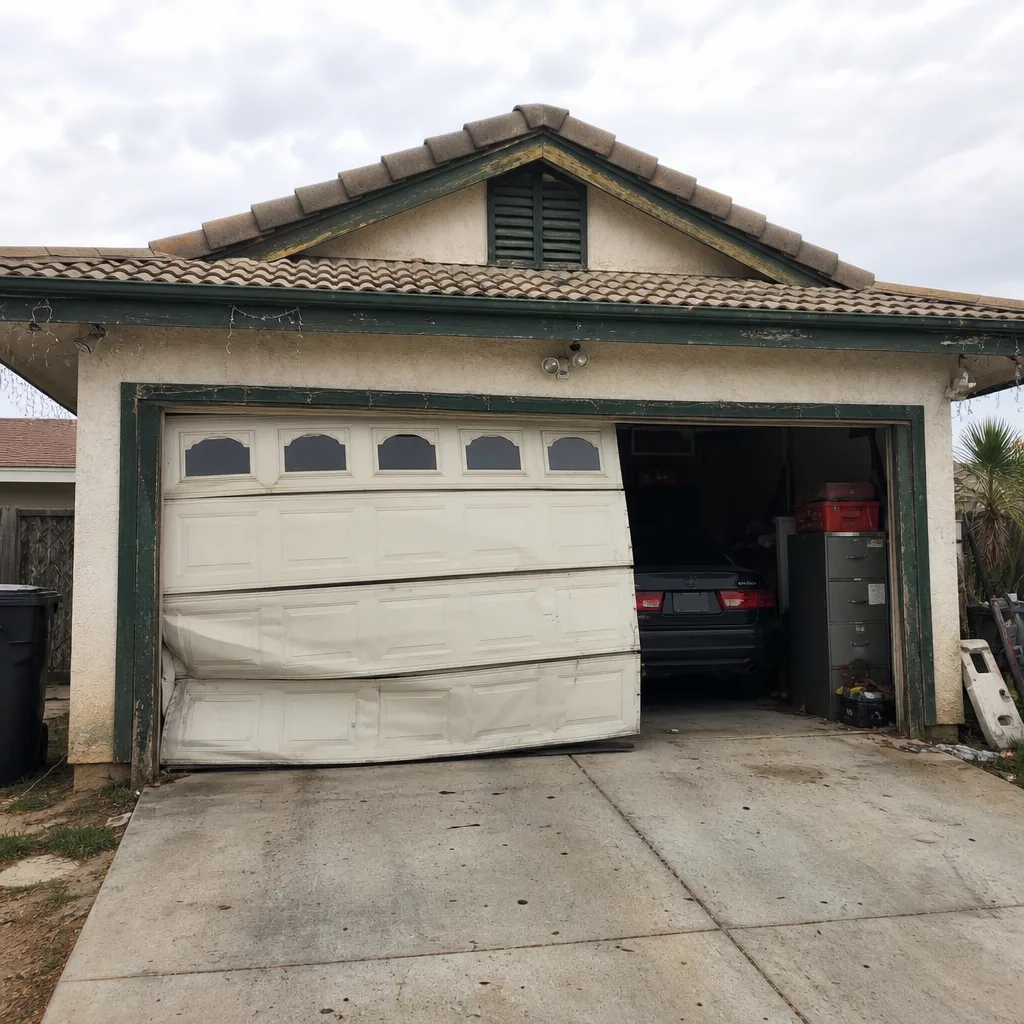 Before
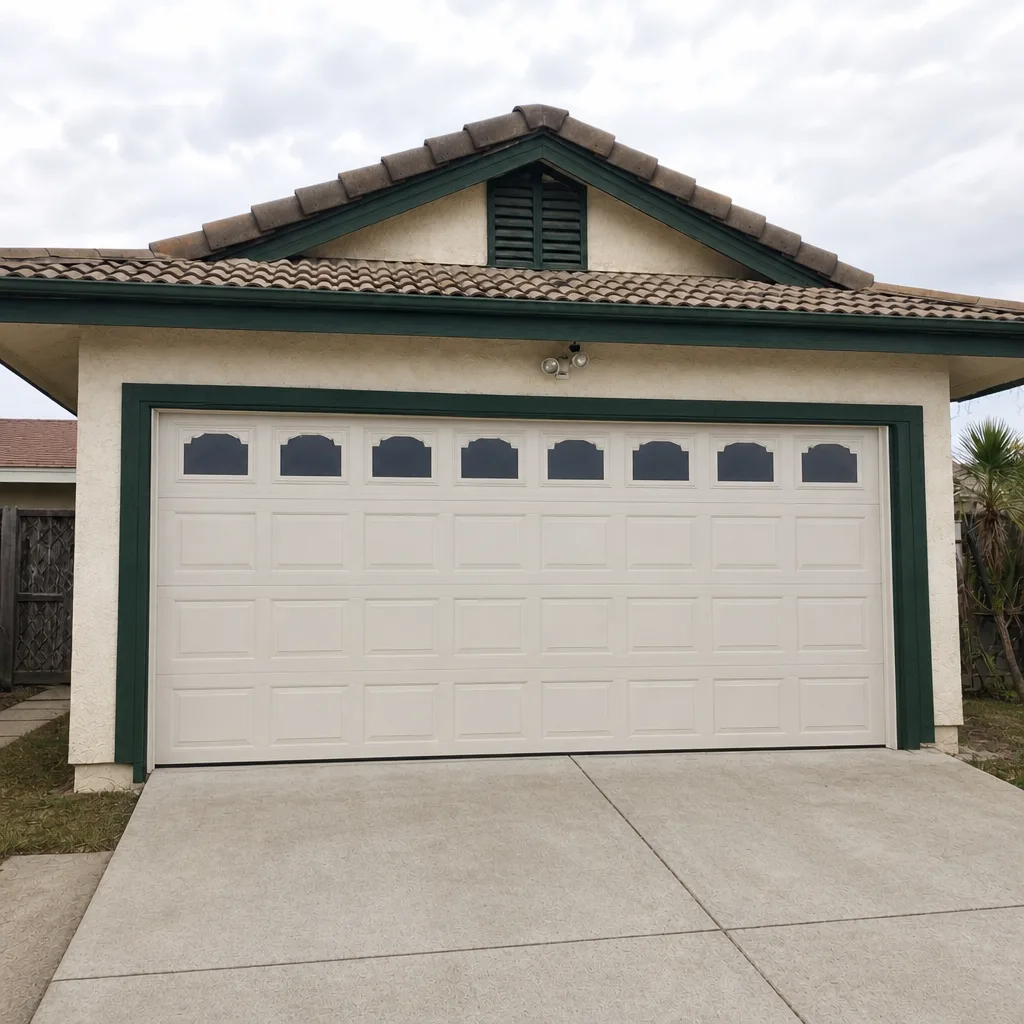 After
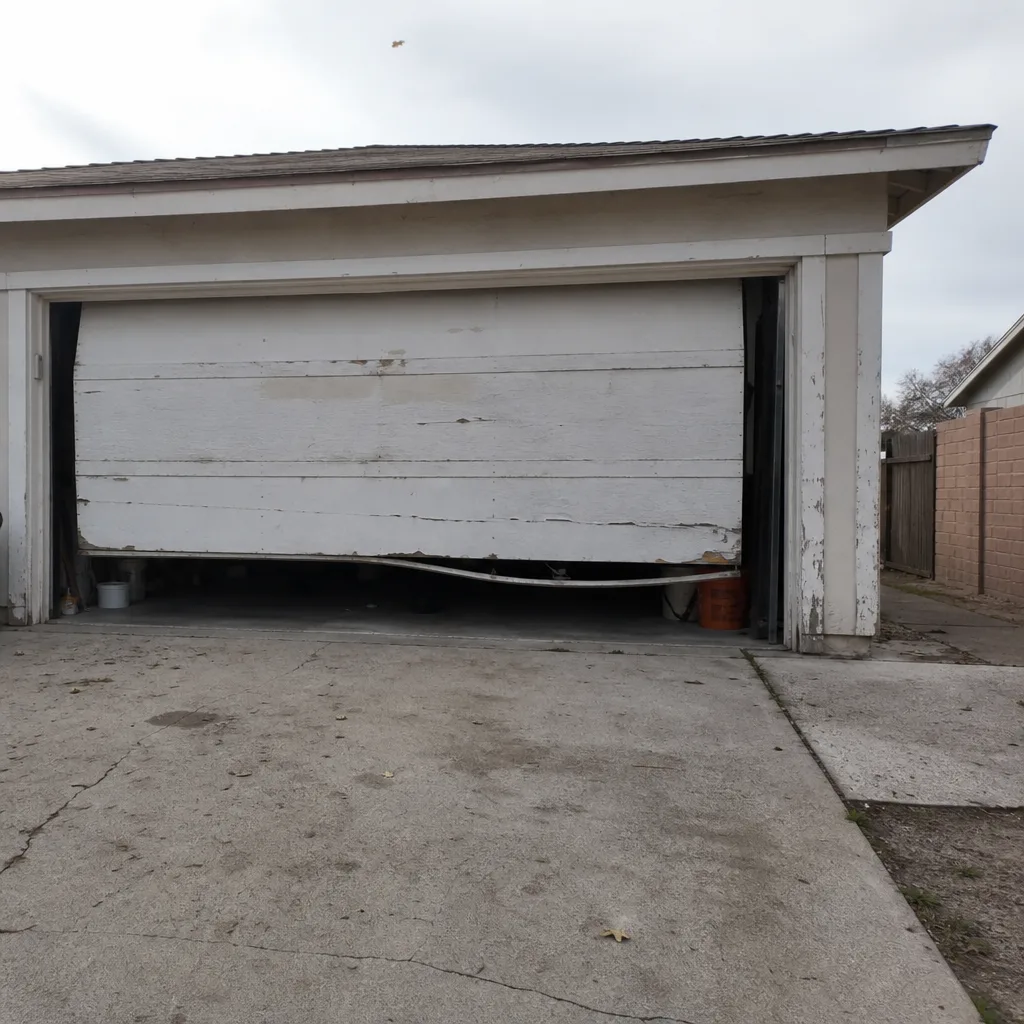 Before
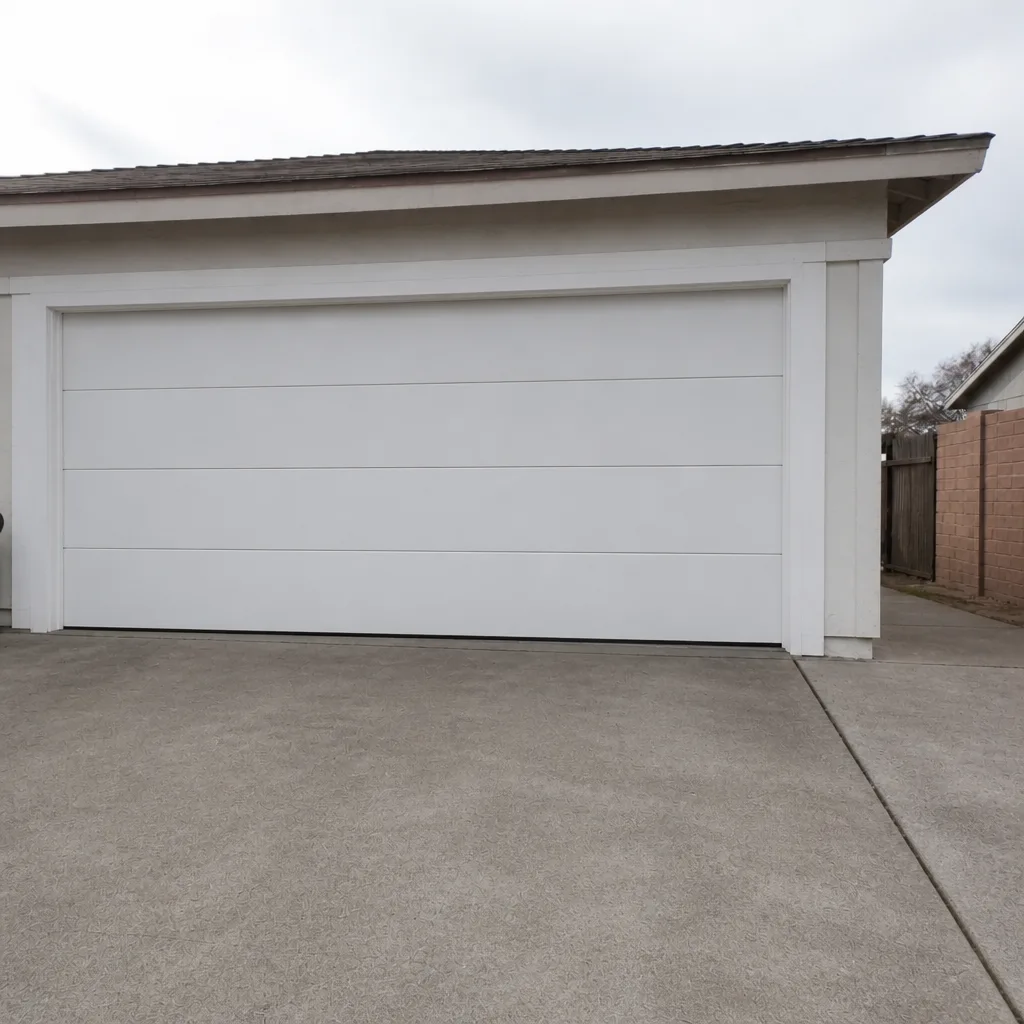 After
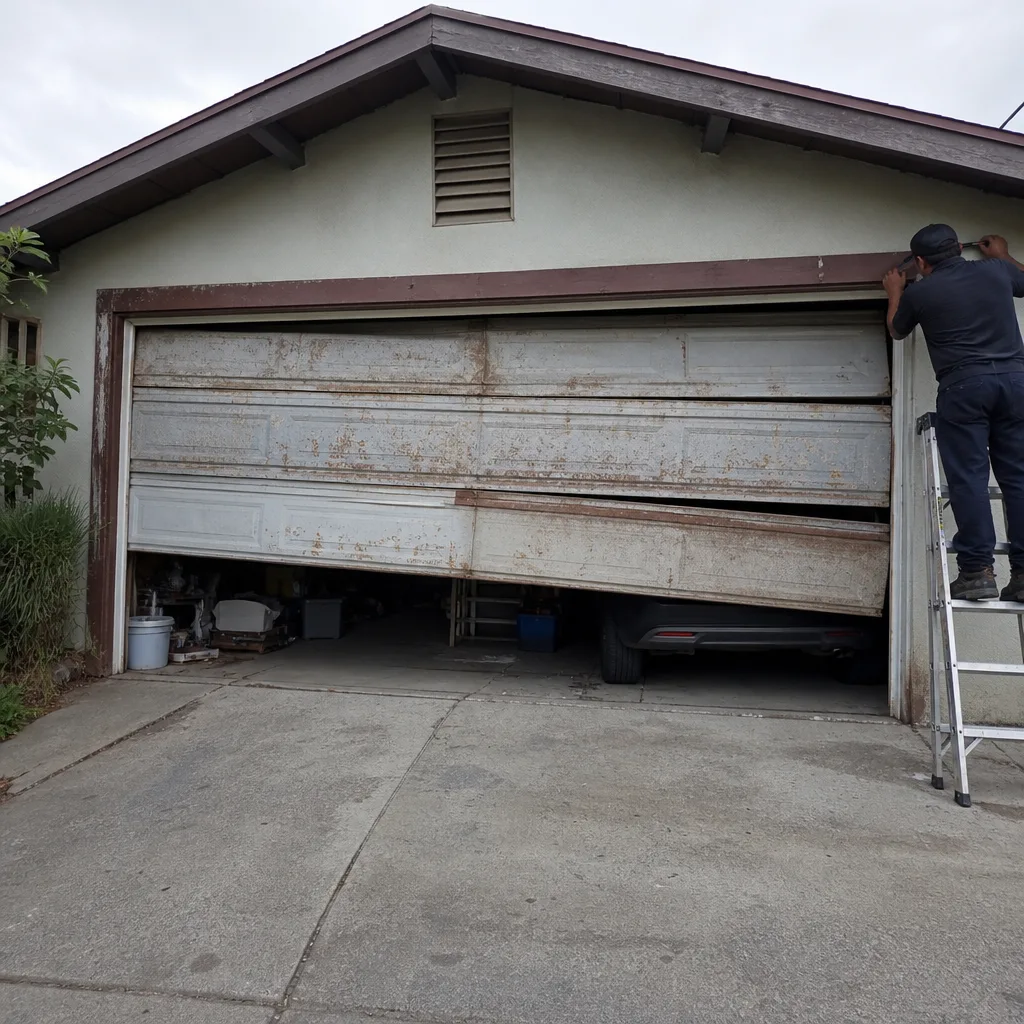 Before
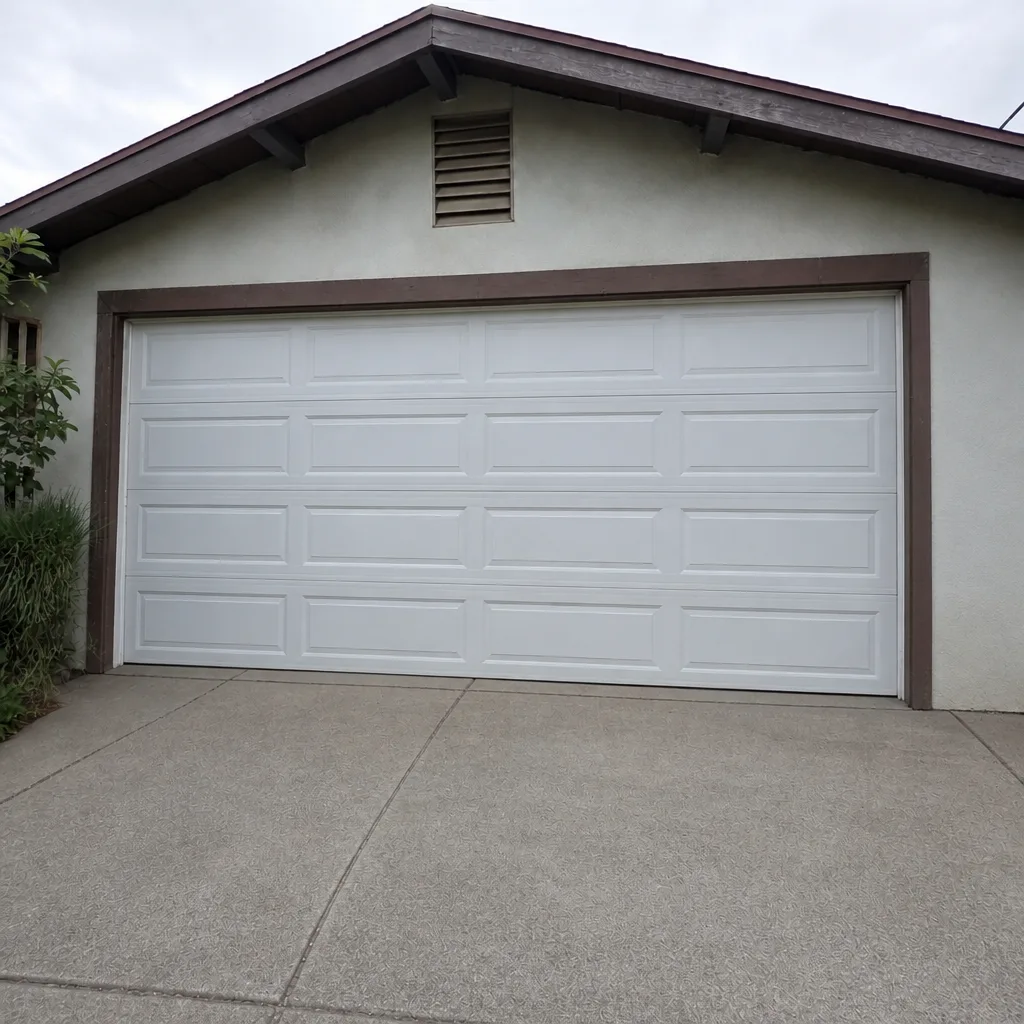 After
When to Call a Professional
Call a professional when the symptom matches a spring, cable, or opener-internal issue; when the door is opening crooked or moving slowly; when you’ve checked the safe items and the problem is still there; or when the door reverses, grinds, or stops in the middle of a cycle and you can’t find an obvious cause. Call sooner rather than later if the door is being used daily – small problems on a door that runs every day get worse faster than most homeowners expect. A spring that’s started to weaken will eventually break. A door that’s binding will eventually damage the opener. We offer free estimates in Bakersfield – call (833) 436-2460. We answer 24/7, with fast dispatch from 7am to 7pm, Sunday through Friday.
Saddle Garage Door Repair handles the whole system – door, opener, springs, cables, rollers, tracks, and panels – so you’re not coordinating between two companies. Our technicians have up to 12 years of experience, and we work on equipment from LiftMaster, Chamberlain, Genie, Clopay, Amarr, Wayne Dalton, Craftsman, and Raynor. That covers most of what’s already on Bakersfield garages, and it means the diagnosis and the repair happen on the same visit with the same company.
Frequently Asked Questions
It’s almost always the photo-eye safety sensors – misaligned, dusty, or blocked. Wipe both lenses, check that the indicator light on each one is solid rather than blinking, and confirm the track is clear. If that doesn’t resolve it, the limit switch is the next suspect, and on some openers that adjustment is best left to a technician. Call (833) 436-2460 for an exact diagnosis – estimates are free.
No. Torsion and extension springs are under hundreds of pounds of tension and can cause serious injury if they release unexpectedly. This is one of the components that should always be handled by a trained technician with the right tools. Call (833) 436-2460 for a free estimate on a spring repair.
Heat affects specific components. The rubber bottom seal hardens and warps, wooden panels swell, opener capacitors wear faster, and metal tracks expand. A door that misbehaves in July and works fine in January is usually showing a heat-related failure on one of those parts. A technician can tell you which one in a single visit. Call (833) 436-2460 to book an appointment.
If the door moves but goes crooked, binds, or grinds, it’s usually a door and hardware problem. If the door doesn’t respond at all, or the opener makes noise without the door moving, it’s usually an opener problem. Some failures involve both, which is why we handle door and opener together. Call (833) 436-2460 for an estimate.
Simple repairs like sensor alignment, remote re-pairing, or a limit switch adjustment are usually done in under an hour. Spring replacements and opener component repairs take longer, and the exact time depends on the specific door and opener. The written estimate will cover the scope before any work starts. Call (833) 436-2460 to schedule.
Yes. Our technicians are trained on eight leading brands – LiftMaster, Chamberlain, Genie, Clopay, Amarr, Wayne Dalton, Craftsman, and Raynor – and they work with the manufacturer’s specifications rather than generic workarounds. That’s the difference between a repair that holds and a repair that needs a second visit. Call (833) 436-2460 for a free estimate.
The Bottom Line
Most garage door problems in Bakersfield match one of five diagnostic patterns, and identifying the pattern is the fastest way to know whether you’re looking at a five-minute fix or a job for a technician. Reversing doors are usually a sensor or limit issue. Grinding, squealing, and scraping point to rollers, hinges, and tracks. A door that won’t respond is usually an opener or power problem. A crooked or slow door is usually a spring, cable, or balance issue. And heat-related failures – seals, panels, capacitors, track expansion – show up in summer and often come and go. The safe checks are worth doing. Springs, cables, and opener internals are not. When the problem lands on the technician side of that line, a call is the shortest path to a door that works.
If you’re in Bakersfield and the diagnosis has you stuck, we can help. Saddle Garage Door Repair offers free estimates on repair, opener work, and new door installation. Call (833) 436-2460. We answer 24/7, with fast dispatch from 7am to 7pm, Sunday through Friday. One call covers the complete door system – springs, cables, rollers, tracks, panels, and the drive unit – so you’re not chasing down a second company to finish the job.
Written by the team at Saddle Garage Door Repair.