
Last updated November 15, 2026
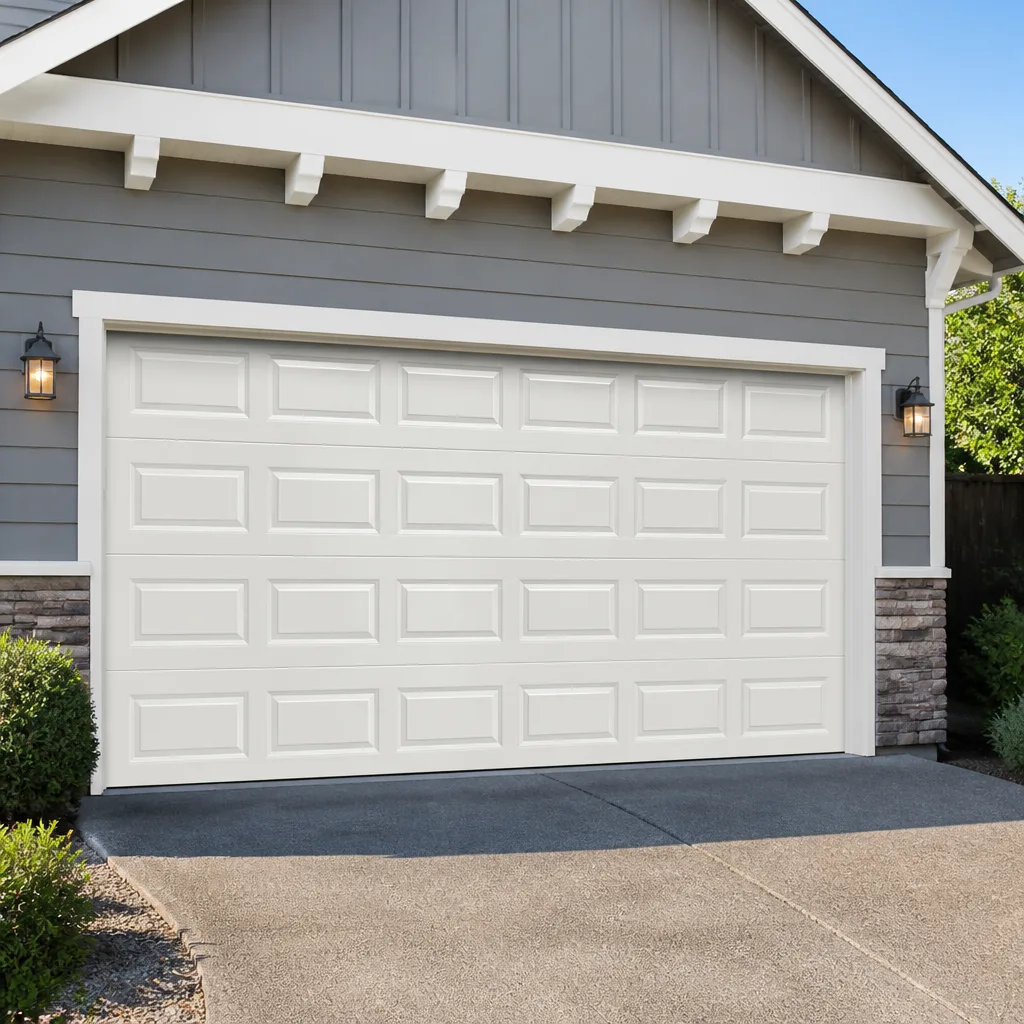 Raised-panel steel
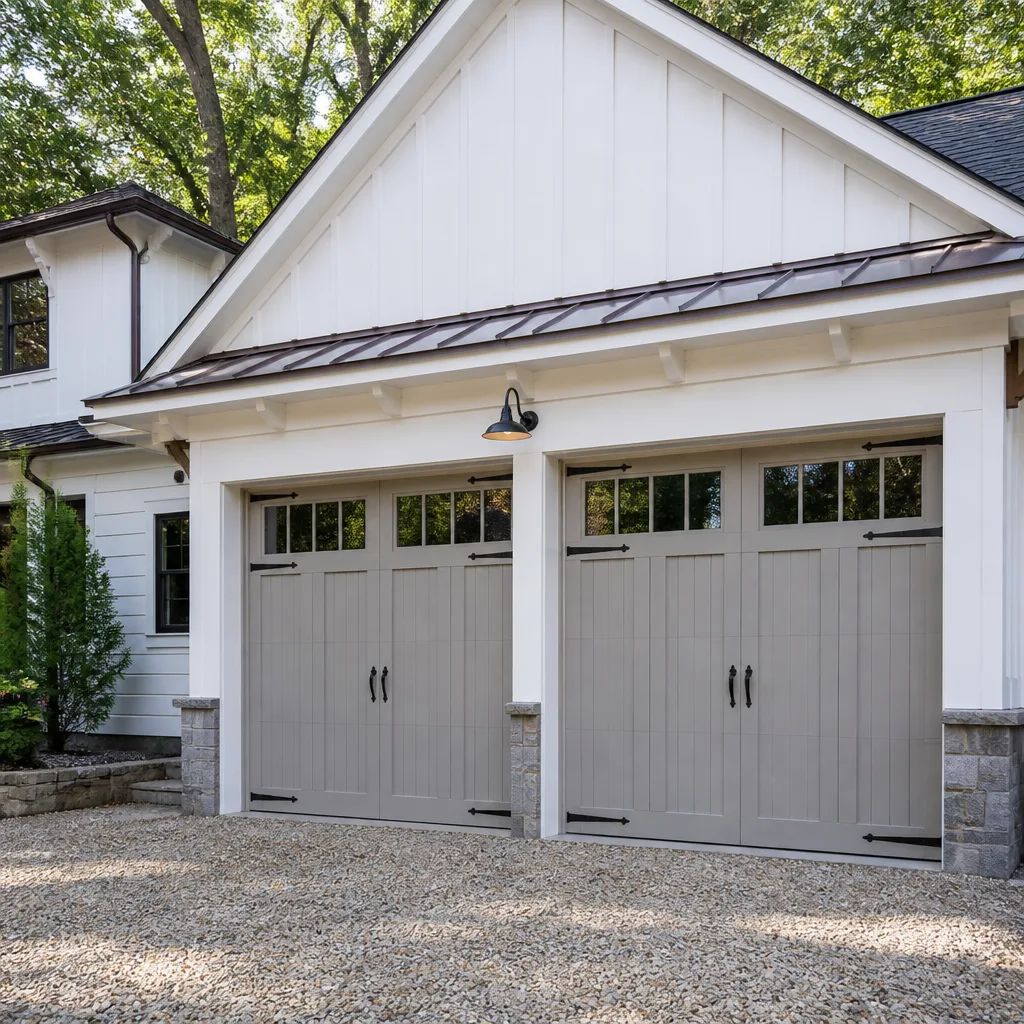 Carriage house
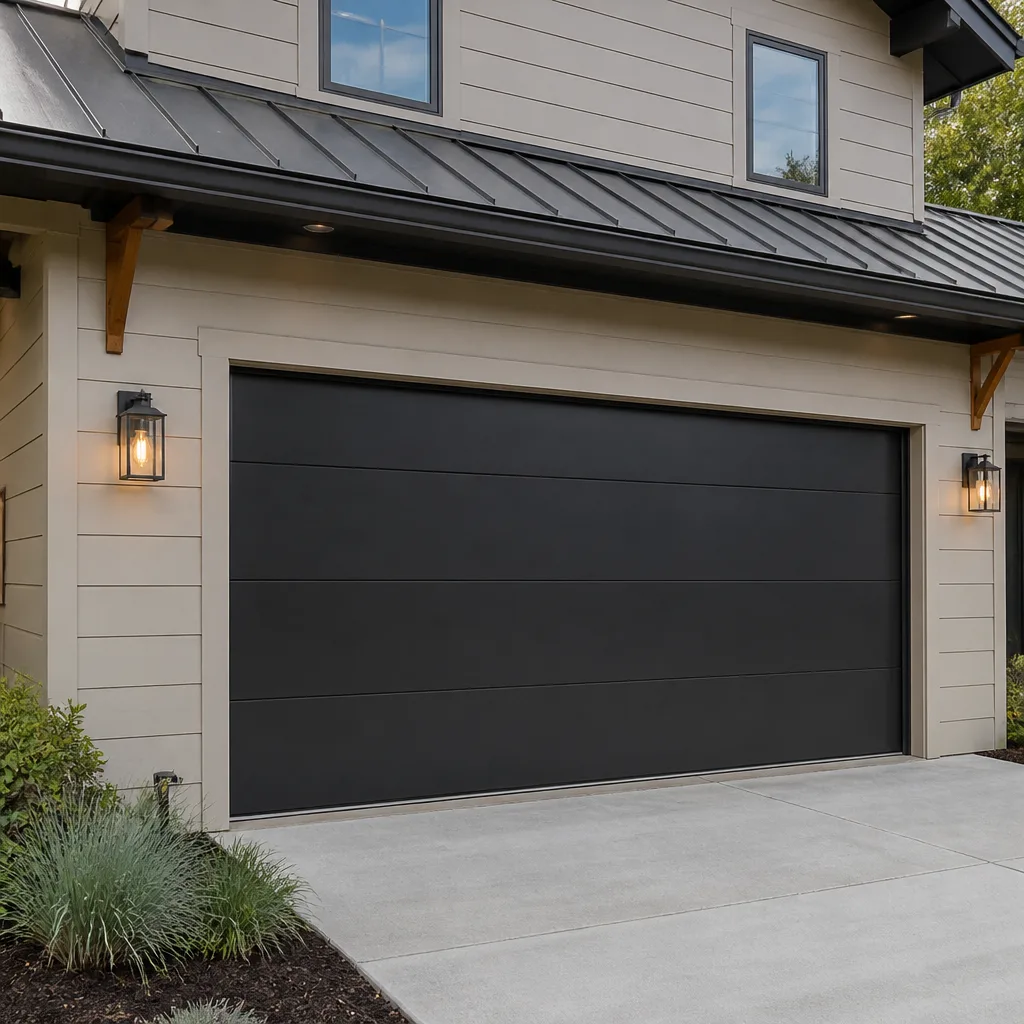 Modern flush
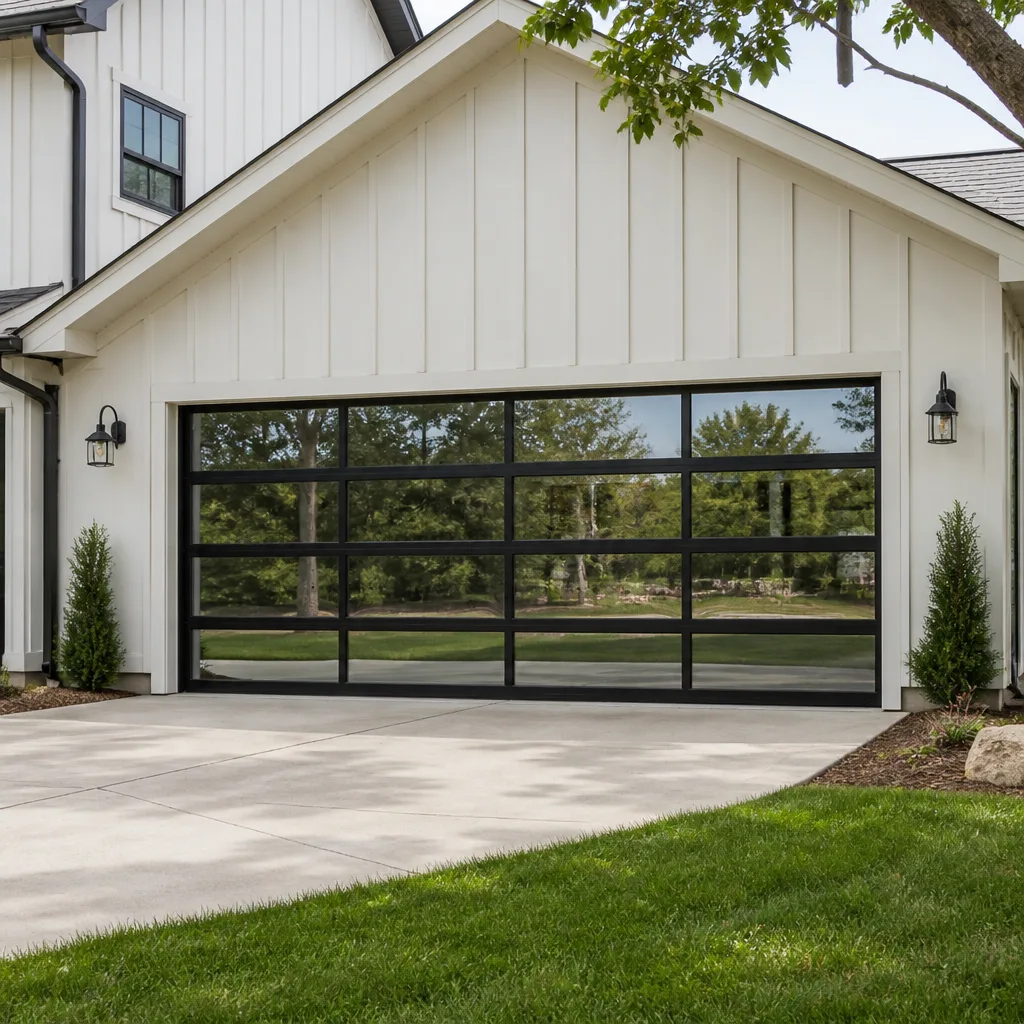 Full-view glass
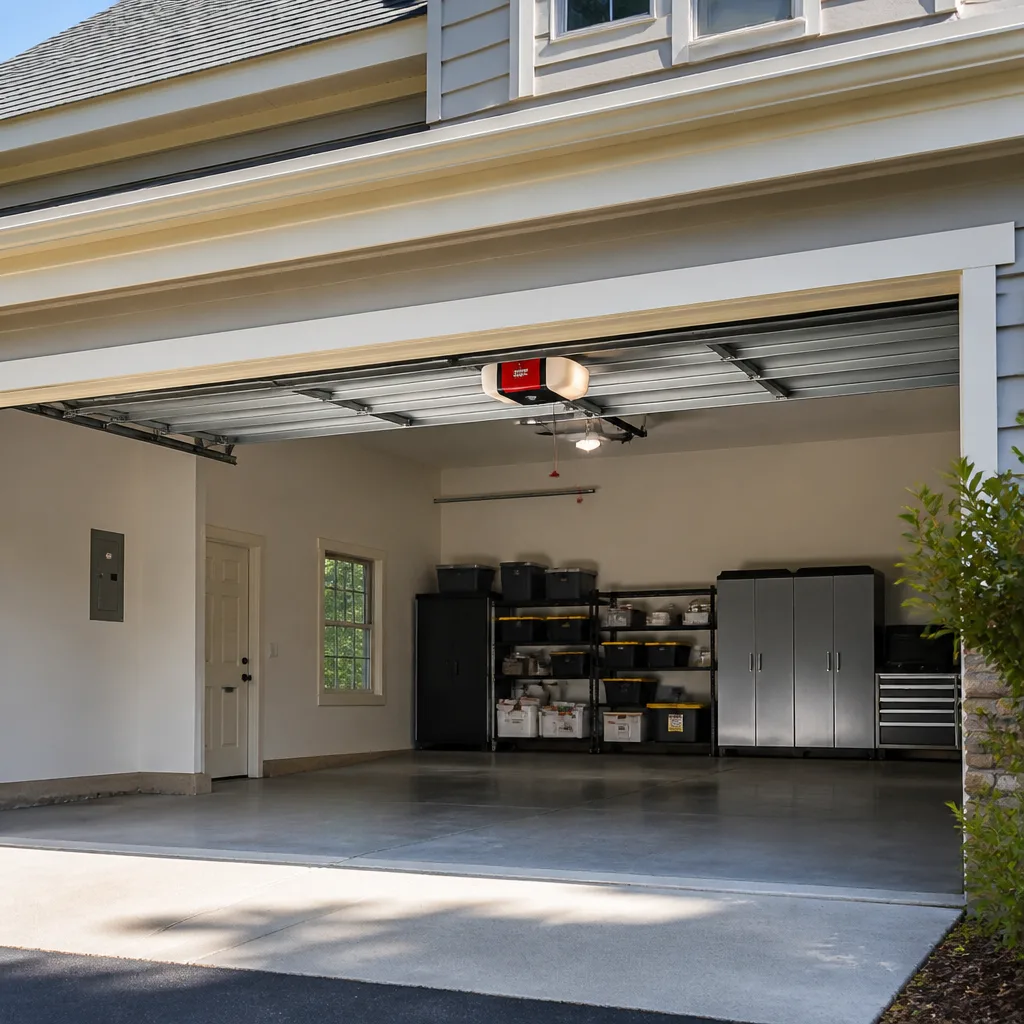 LiftMaster openers
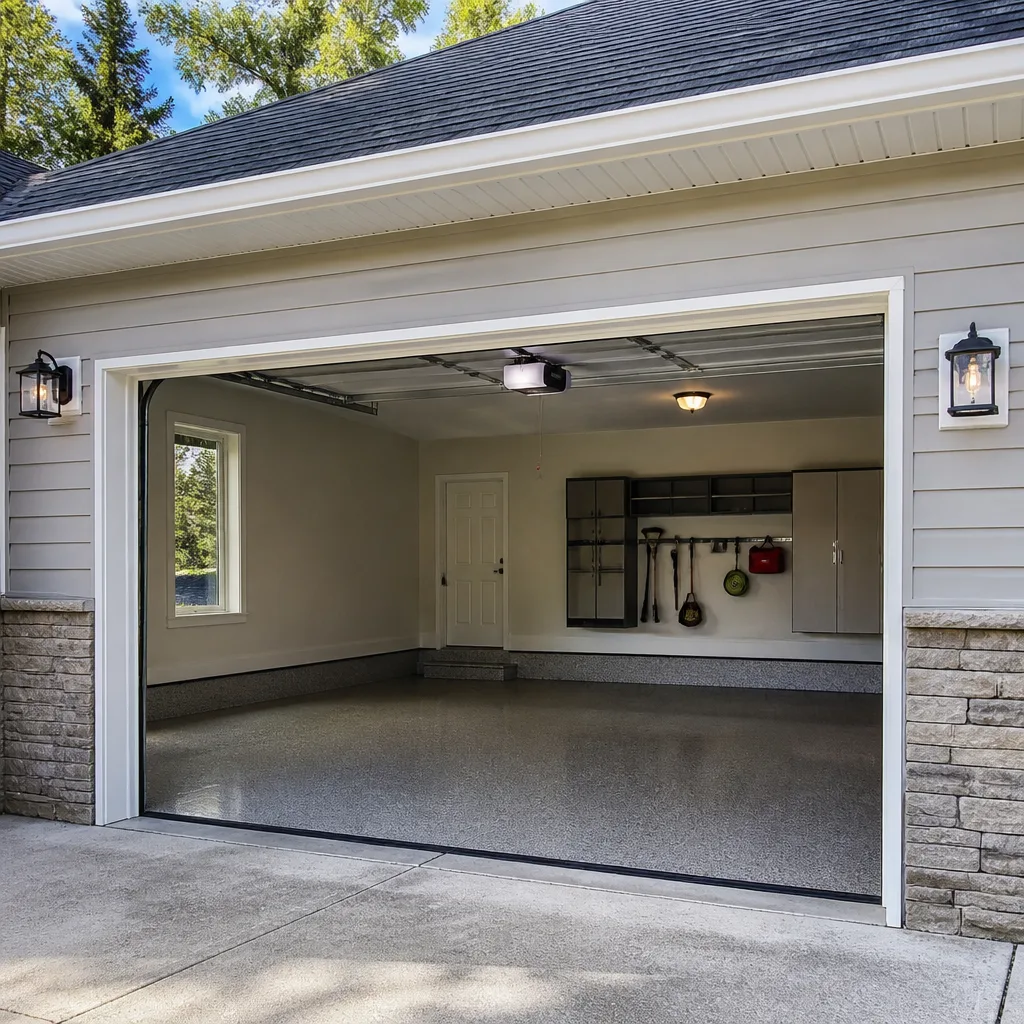 Chamberlain openers
Full 25-point door and opener safety check with every visit - springs, cables, rollers, tracks, and your LiftMaster or Chamberlain opener included
You get a price before we start. It does not change when the pro arrives.
Get your free estimateGarage Door Warning Signs: A Bakersfield Homeowner’s Reference Guide
The most expensive garage door repairs we see in Bakersfield don’t start as emergencies. They start as a noise someone decided was “just how it sounds now.” A door that still opens is a door most homeowners stop listening to, and that’s the trap. Springs, cables, and rollers rarely fail without announcing themselves first, usually for weeks. The trick is knowing which announcement means “call this week” and which means “stop using the door.” This guide breaks down the warning signs by sense, sound, sight, feel, and smell, so you can describe exactly what’s happening and get the right parts to your driveway on the first visit.
Quick Answer
Garage door warning signs are the sounds, sights, and sensations a failing door gives off before it stops working entirely. A grinding or popping noise, a door that jerks or reverses, visible rust or cracked panels, and a door that feels unbalanced by hand are all signs something in the system is wearing out. Most homeowners in Bakersfield can catch these weeks before a breakdown, which usually turns a small repair into a much larger one.
Styles & brands we work with
- Raised-panel steel
- Carriage house
- Modern flush
- Full-view glass
- LiftMaster openers
- Chamberlain openers
Table of Contents
- What Sounds Are a Warning Sign?
- What Visual Warning Signs Should You Look For?
- What Should the Door Feel Like When It Moves?
- What Does Smell Tell You About a Failing Opener?
- Which Warning Signs Are Unique to Bakersfield?
- Warning Sign vs. Urgent Sign: What’s the Difference?
- How Do You Document a Warning Sign for a Technician?
What Sounds Are a Warning Sign?
Sound is the earliest and most misread warning sign a garage door gives you. The door is a mechanical system with springs under tension, metal rollers riding in metal tracks, and a drive mechanism pulling the whole assembly up and down. Each part fails with a different sound, and homeowners routinely confuse them. A door that “just sounds louder” is usually telling you exactly which component is on its way out.
Here’s how the sounds break down, in the order we hear them described on service calls in Bakersfield:
- A sharp pop or bang from above the door: almost always a torsion spring. These springs are under extreme tension, and when one breaks, it snaps with a loud crack. If you hear it once and the door suddenly feels twice as heavy, stop using the door.
- A grinding or scraping sound as the door moves: typically a roller that has seized or a track that’s out of alignment. The door is dragging metal on metal.
- A rhythmic squeak or squeal: usually worn rollers or dry hinges. Less urgent, but it accelerates wear on everything around it.
- A rattling or banging sound near the opener: often a loose chain or belt, or a drive gear inside the opener that’s stripping. This is garage door opener repair territory, not a door problem.
- A single loud clunk when the door finishes closing: usually a worn bottom seal or a limit switch on the opener set too far, so the door slams instead of settling.
The confusion point: a grinding sound feels like a spring problem to most homeowners because it’s loud, but it’s usually a roller or track issue, which is a smaller repair. A popping sound feels like a roller issue because it’s sudden, but it’s almost always the spring, which is the more serious one. Getting that backward is common, and it’s why describing the sound accurately matters so much.
One safety note before you go poking around: torsion springs and the cables they’re attached to are under enough tension to cause serious injury if you try to adjust or replace them yourself. Don’t. A trained technician has the right tools and knows how to release that tension safely.
What Visual Warning Signs Should You Look For?
Visual warning signs are the easiest to check and the easiest to ignore, because they develop slowly and the door keeps working around them. A quick walk-around once a month catches most of what’s worth catching. Here’s what to look at, and what each thing tells you:
- Rust on the panels, hinges, or tracks. Surface rust on hinges and rollers is a lubrication issue. Rust that’s pitting the metal or spreading along a track weld is structural, and it means the track is weakening where the door rides.
- Cracked or faded panels. In Bakersfield, sun exposure is relentless, and it shows up as chalky, faded paint and hairline cracks along panel seams. A crack in the panel skin isn’t cosmetic; it lets moisture in and weakens the panel’s structure.
- Dented or bent panels. Even a small dent can throw a panel slightly out of plane, which makes the door bind in the track as it moves.
- Sagging sections across the top or middle. A visible sag means the door’s balance is off, usually from a spring that’s lost tension.
- Frayed or kinked cables. Look along the vertical cables at the sides of the door. A cable with broken strands or a sharp kink is a hazard, not a nuisance.
- A crooked door when closed. If one side sits lower than the other, or the door doesn’t sit flush with the ground, the balance or the tracks are off.
- Loose or missing hinges and bolts. A hinge that’s rattling loose puts uneven stress on the panel it’s bolted to, which can crack the panel over time.
If you can see daylight under a closed door, or the bottom seal is flattened and torn, that’s a smaller visual sign but a real one: the seal is the door’s weather barrier, and in Bakersfield’s hot summers and dusty springs, a bad seal lets heat and grit into the garage every day.
What Should the Door Feel Like When It Moves?
How the door feels and moves is the sense homeowners interact with most and analyze least. A door should move in one smooth, even motion, with roughly the same effort the whole way up and the whole way down. When that stops being true, something in the system is working harder than it should be.
Here’s how to tell whether what you’re feeling is a warning or a normal quirk:
- Does the door feel much heavier when you lift it by hand, with the opener disconnected? If yes, the springs have lost tension and are no longer carrying the door’s weight. That’s a warning sign, and it’s one of the most common ones we hear about on garage door repair calls.
- Does the door jerk or stutter as it travels? That’s a binding issue, usually a track or roller problem. It’s the door fighting itself on the way up.
- Does the door reverse for no clear reason, even with nothing in the way? This is an opener sensor or limit-switch issue, and it should be checked before the door decides to stop responding altogether.
- Does one side of the door lift faster than the other? A lopsided lift usually means one spring is doing more work than the other, or a cable has slipped.
Do the manual lift test with the door fully closed and the opener disconnected, and use one hand, keeping clear of the spring hardware. If the door feels heavier than you remember, or you can’t lift it at all, it’s time to call. That’s not a test that gets easier with practice.
What Does Smell Tell You About a Failing Opener?
Smell is the warning sign almost nobody mentions, and it’s the one that tends to mean “stop now.” A garage door opener is an electric motor, and motors that are overheating, shorting, or failing give off a distinct hot, acrid, or burning smell. If you notice it, the opener is telling you it’s under strain or has an internal problem, and running it again can turn a small opener fix into a replacement.
Where smell fits into the picture:
- A burning smell near the opener head: usually the motor overheating or a drive gear wearing down under load. Stop using the door and have the opener checked.
- A hot plastic or rubber smell: often a belt or chain that’s slipping or a motor straining against a door that’s become too heavy for it.
- A burning smell from the wall outlet or wiring: treat this as urgent. It points to an electrical issue, and electrical work isn’t a DIY job. Call a licensed electrician or have us take a look before you cycle the door again.
- A musty or damp smell in the garage: not an opener problem, but it usually means moisture is getting in through a failed seal or a gap at the door’s base, which is worth fixing for the door’s sake as much as the garage’s.
Smell is also a useful cross-check on the other senses. A door that squeaks (sound) and feels heavy (feel) but also gives off a faint hot-motor smell (smell) is likely straining the opener because the springs aren’t doing their share of the lifting. One call covers the whole door system, springs and drive unit together.
Which Warning Signs Are Unique to Bakersfield?
Some warning signs are universal, and some are written by where you live. In Bakersfield, the sun and the water are the two biggest co-authors of garage door wear, and they show up in patterns that don’t look the same anywhere else.
First, hard water and irrigation runoff. Bakersfield’s water is hard, and when a lawn or planter is irrigated close to the face of the garage, the overspray and runoff splash up onto the bottom panels and the hinges near the floor. That leaves mineral deposits and rust streaks in a distinct pattern, a white crust along the bottom panel and brown staining creeping up from the ground. On a typical door that pattern alone tells us the bottom section is taking more wear than anything above it.
Second, sun-bleached panel cracking. A west- or south-facing garage door in Bakersfield takes a lot of direct sun, and that shows up as faded paint, chalky panels, and hairline cracks along the seams where the panel’s structural skin has dried out and weakened. That’s not cosmetic: a cracked panel can split cleanly when the door flexes, and it can let moisture into the panel’s core. On steel doors, cracked paint is often the first place rust gets a foothold.
The neighborhood context matters too. A door facing a wide, unshaded driveway in a hot part of southwest Bakersfield sees more heat exposure than a door tucked under a shade tree near the older tree-lined streets closer to downtown. When you describe your door’s location and facing direction to a technician, you’re describing how much sun and heat it’s been through, and that shapes which components to check first.
For a closer look at the specific conditions and what they mean for your door, our Bakersfield page covers the local side of the picture.
Warning Sign vs. Urgent Sign: What’s the Difference?
Not every warning sign is a “stop now” sign. Some are a “call this week” sign, and knowing which is which is the difference between a simple repair and a much bigger one. Here’s how we sort them.
Warning signs (call this week, don’t ignore, but the door still works):
- A squeak, squeal, or rhythmic grinding that gets a little worse each day
- Surface rust on hinges or bottom tracks, or a chalky panel that needs attention
- A door that feels slightly heavier than before, or binds a little on the way up
- A limit switch that makes the door land a little hard
- A fading panel, or a crack that hasn’t spread yet
- An opener that reverses on its own and then works again later
Urgent signs (stop using the door, call today):
- A pop or bang from the spring area followed by a door that won’t lift or feels extremely heavy
- A door that’s hanging crooked, off its track, or has come apart at a hinge
- A snapping or popping sound from a cable, or a visibly frayed cable
- A burning smell from the opener or its wiring
- A door that won’t stay down, or that reverses on its own with nothing in the way
- Any time the door has started to slam or free-fall rather than lower under control
When it’s urgent, the right move is to stop running the door and call. When it’s a warning, the right move is to get it on a schedule, and that’s a much cheaper place to be. The price is quoted and agreed before any work starts, and free estimates in Bakersfield mean there’s no cost to finding out which bucket you’re in. Call (833) 436-2460 to schedule an assessment.
How Do You Document a Warning Sign for a Technician?
Documenting a warning sign well is the fastest way to get the right parts on the first visit, instead of a second trip to finish the job. A technician who knows what’s wrong before arriving can load the right springs, rollers, or opener components for your door’s brand. That’s the practical reason it matters, and it’s how we approach Saddle Garage Door Repair service calls.
Here’s a simple, repeatable way to document your door’s symptoms:
- Describe the sound in plain words. Is it a pop, a grind, a squeak, a rattle, or a bang? Note when it happens: opening, closing, or just as the door finishes.
- Note where it comes from. Above the door (springs), along the sides (tracks and cables), or at the opener head (drive unit).
- Take a short phone video. A 15-second clip of the door opening and closing from a side angle catches things a description can miss.
- Note what you see. Rust, dents, cracks, a crooked closed door, or a frayed cable. A close-up photo of anything you’re unsure about helps.
- Write down your door and opener details. The brand and model of both, if you can find them on the door’s inside panel or the opener’s housing. We work on the major brands, including LiftMaster, Chamberlain, Genie, and Clopay, and knowing the model tells us which replacement parts are correct.
- Note the sun and water exposure. Which way the door faces, and whether irrigation or runoff reaches it, because that shapes which panels or hardware we inspect first.
- Note the door’s age and anything recent. A door that just started acting up after a storm, a repair, or a move is a different kind of problem than one that’s been noisy for months.
When you call, share your video and notes. It’s a small effort upfront that saves a lot of guesswork on the first visit, and it means the right parts are on the truck before we ever pull up to your driveway.
Common Mistakes to Avoid
- Normalizing a noise that’s gotten louder. A door that’s been grinding for weeks isn’t “how it sounds now,” it’s a roller or track issue that’s wearing everything around it. Every day it runs, it does a little more damage.
- Replacing one spring when a matched pair needs replacing. The two springs on a door are made to work together, and a single spring replacement is usually a temporary fix. It’s usually better to replace the pair and be done with it.
- Ignoring a rust pattern near the irrigation. Rust streaks along the bottom panels and hinges trace back to hard water and local runoff. Left alone, that rust spreads into the track and hinge hardware where the door actually rides.
- Reaching for a can of lubricant as a repair. A quick squirt of lubricant can quiet a squeak for a few days, but it doesn’t fix a worn roller or a track that’s out of alignment. If a problem keeps coming back, the part is probably worn, not dry.
- Trying to adjust the springs yourself. This is a real safety issue. Torsion springs are under extreme tension, and the wrong move can cause serious injury. Have a trained technician handle anything involving the springs or cables.
- Calling a general handyman for opener problems. Opener repair, especially on smart or Wi-Fi-enabled units, needs someone who knows the manufacturer’s specifications, not a generic workaround. LiftMaster and Chamberlain openers in particular need the right parts and settings.
- Waiting until the door won’t open to call. A door that’s stuck is usually the same problem you could have caught as a warning a month earlier, and the fix is often simpler and smaller when you find it early.
See the difference
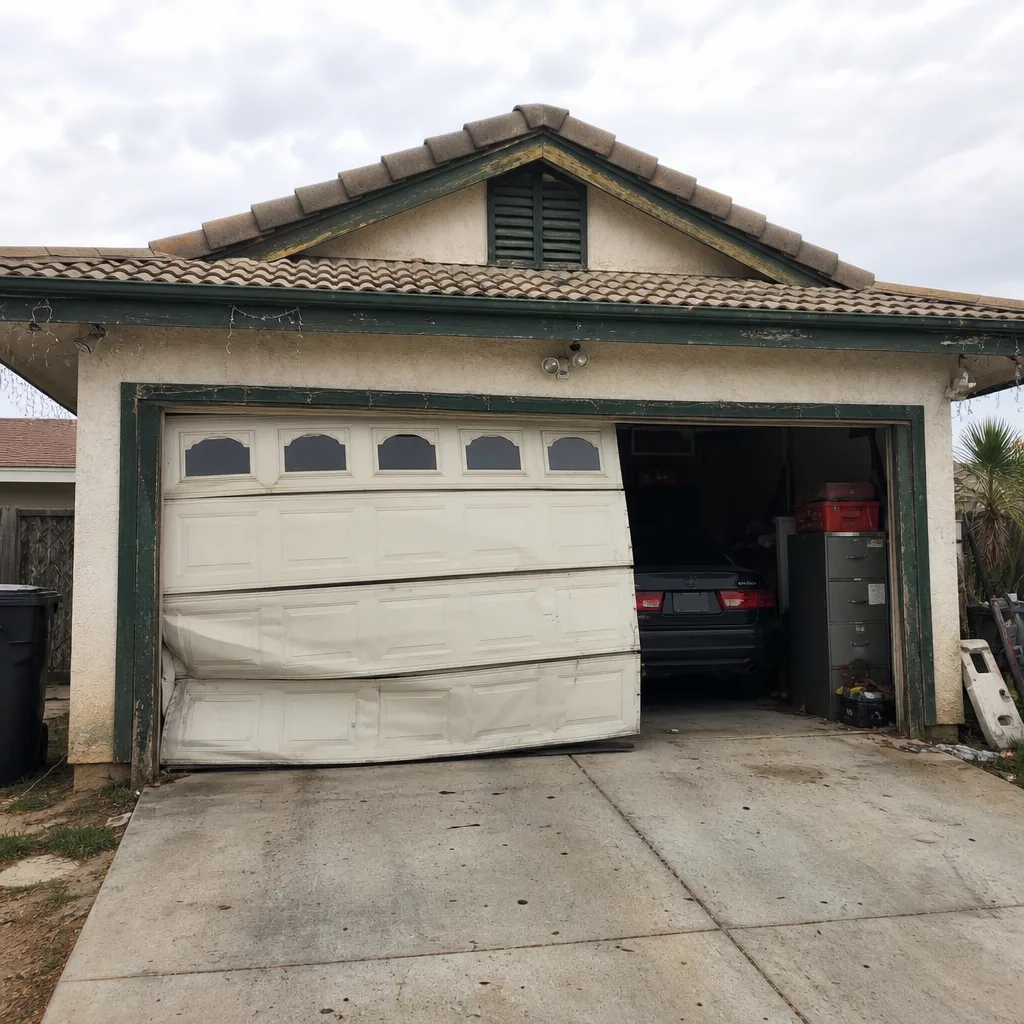 Before
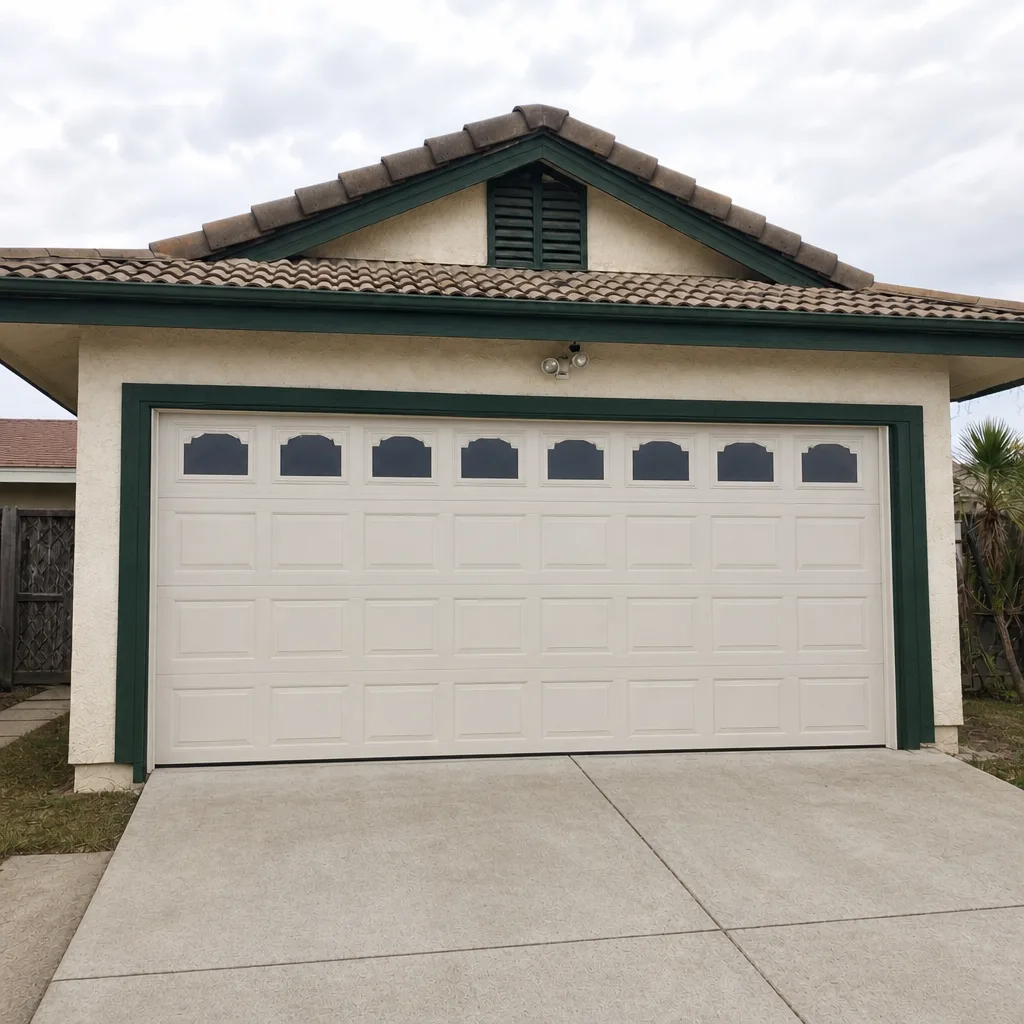 After
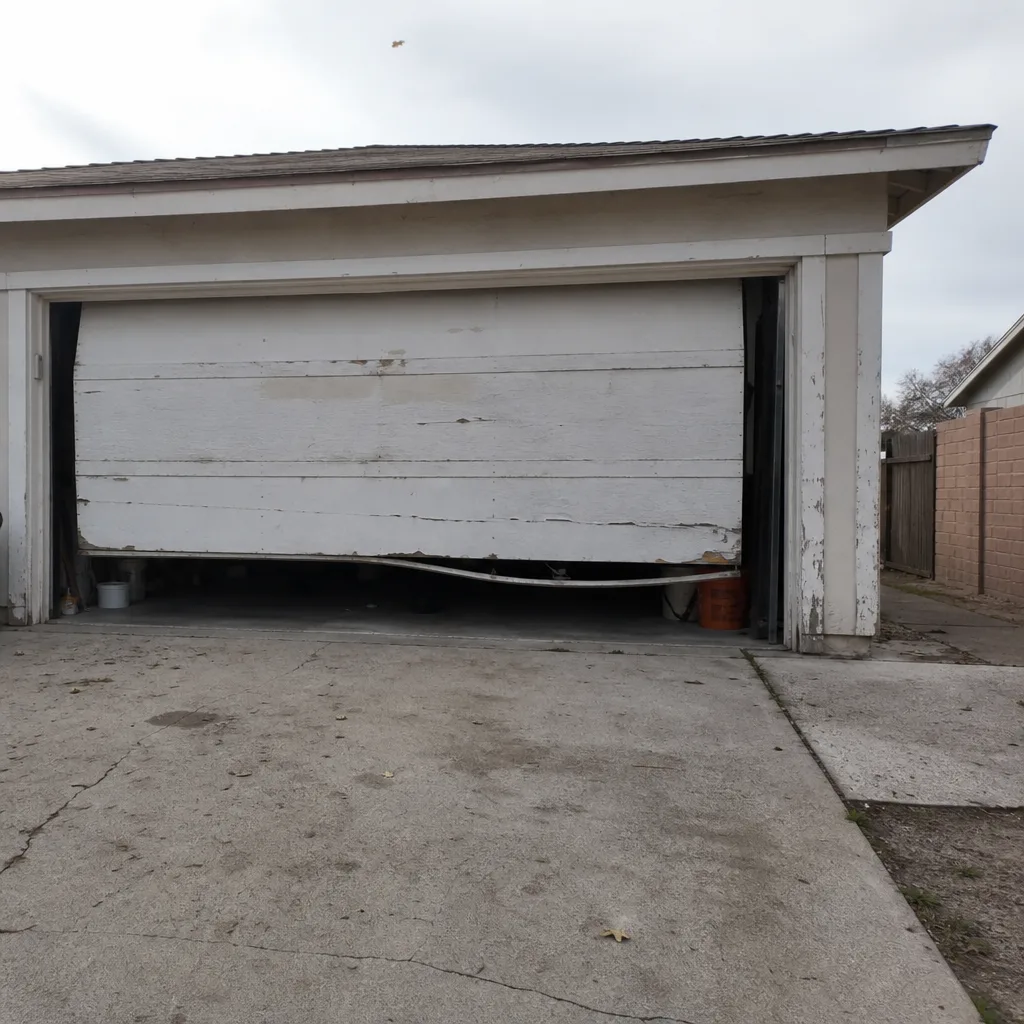 Before
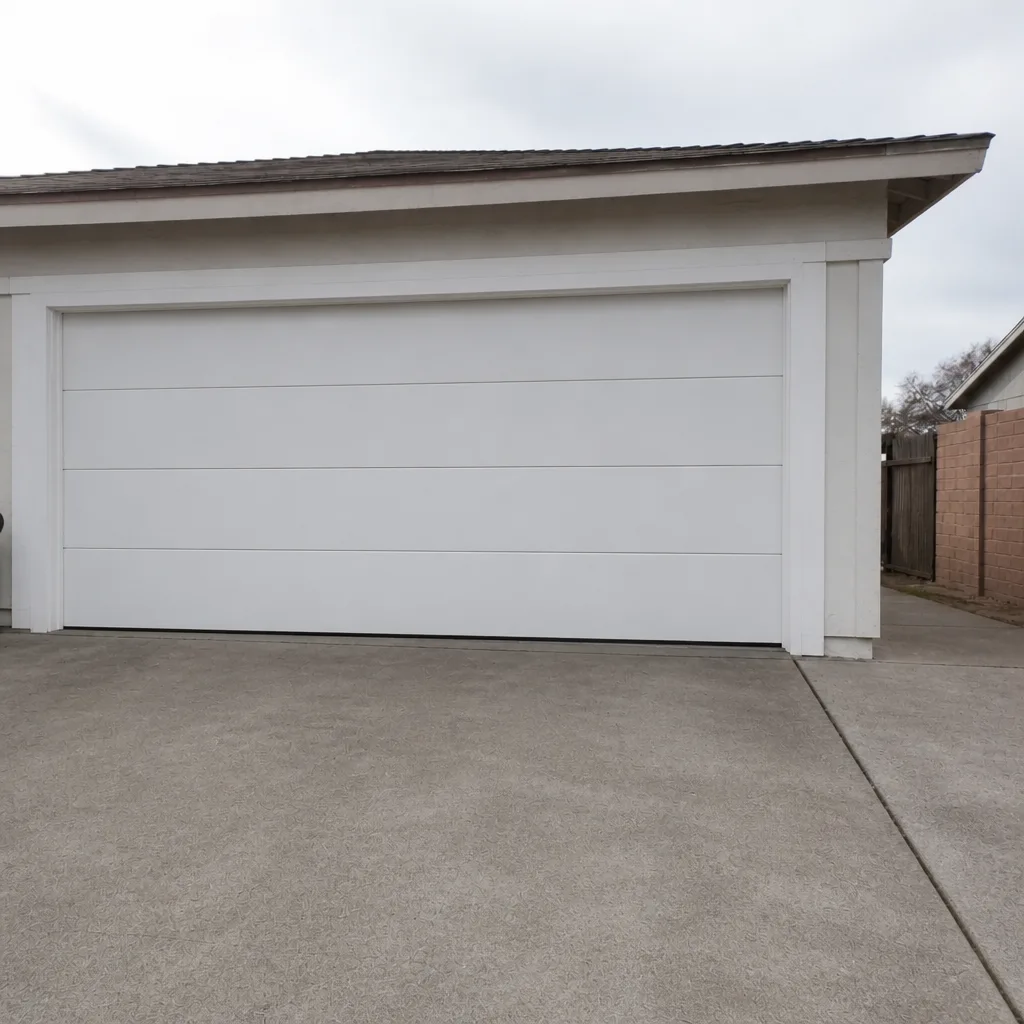 After
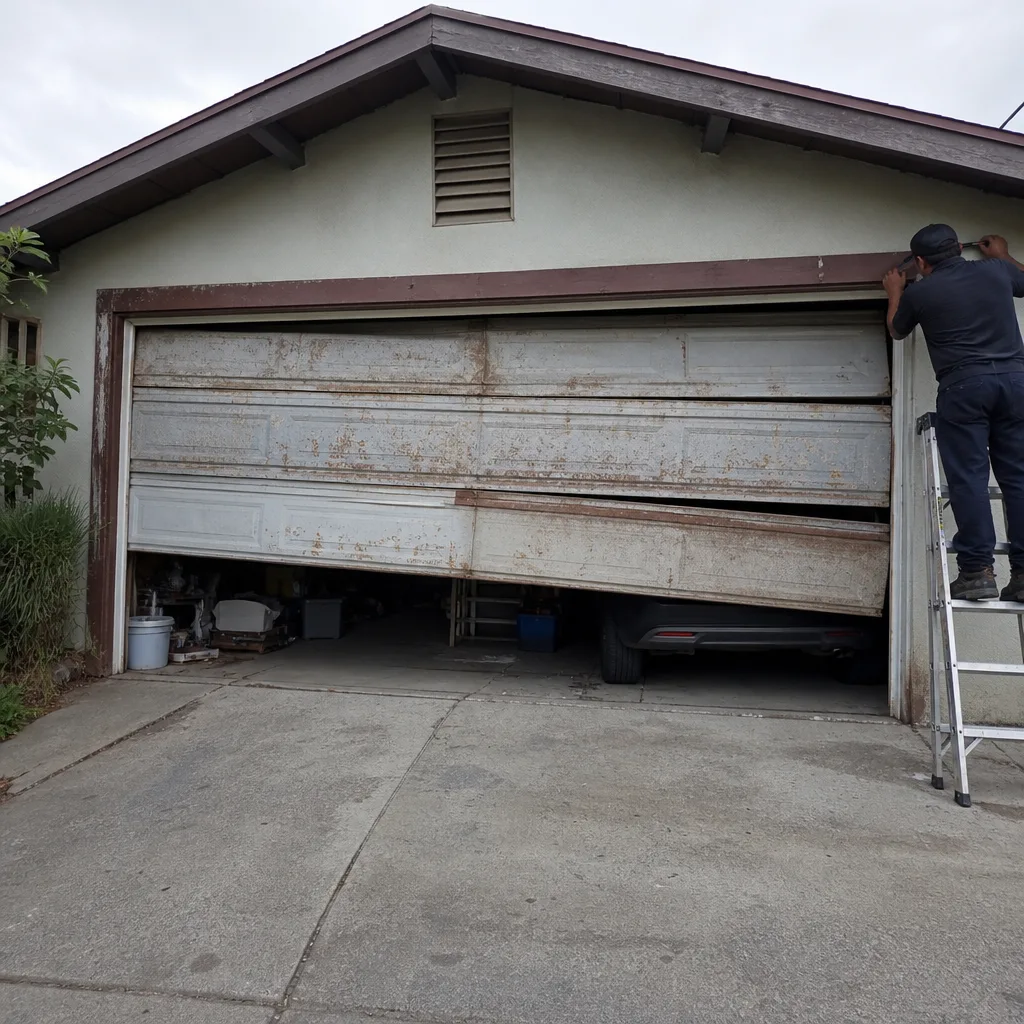 Before
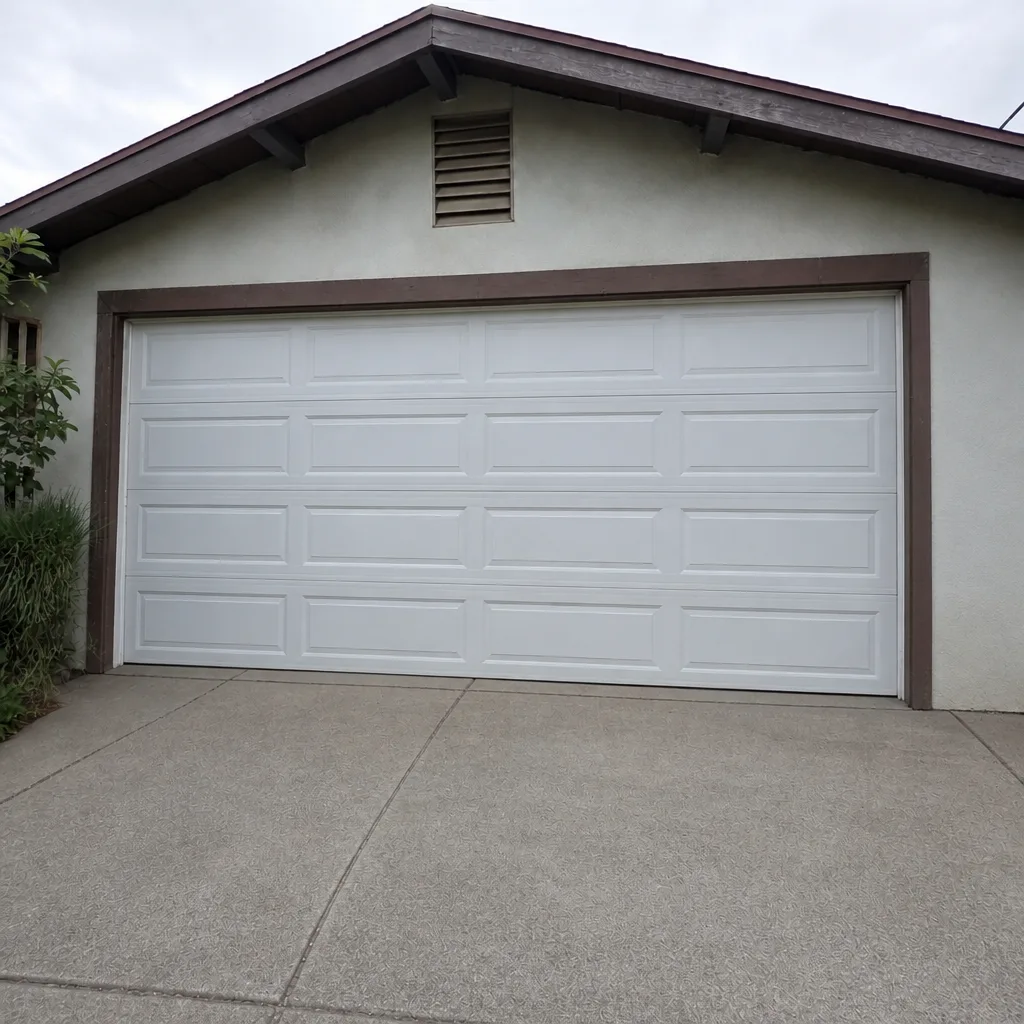 After
When to Call a Professional
Call a professional when a warning sign keeps coming back, when any urgent sign shows up, or when you’re not sure which you’re dealing with. Specific moments: a pop from the spring area, a door that’s hanging crooked, a burning smell from the opener, or a door that reverses on its own with nothing in the way. Those aren’t signs to sleep on. And for the quieter ones, a door that squeaks, feels heavier, or shows rust creeping up from the floor, a quick assessment is cheaper than letting it develop into a bigger repair. We handle door and opener together, so one visit covers what a handyman might hand off. Saddle Garage Door Repair offers free estimates in Bakersfield. Call (833) 436-2460 to get your door looked at before it stops working.
Frequently Asked Questions
The most common warning sign we hear about is a grinding or squeaking noise that gets a little louder each week. In Bakersfield’s heat and dust, rollers and hinges wear faster than most homeowners expect, and the sound is the first thing that changes. Call (833) 436-2460 for a free estimate and we’ll tell you whether it’s the rollers or something more.
Small fixes like lubricating hinges are fine to handle yourself, but anything involving springs, cables, or opener wiring should go to a trained technician. Springs are under heavy tension, and the risk of injury from a DIY attempt is real. Call (833) 436-2460 and let a technician take a look instead.
Metal expands and contracts with temperature swings, and Bakersfield’s hot days put real stress on door hardware. That can make an existing roller or track issue louder in summer, and it’s why doors that sound fine in cooler weather start acting up when the heat hits. Call (833) 436-2460, and we’ll diagnose it before it becomes a bigger repair.
A quick walk-around once a month catches most issues early, with a more careful look at the springs, cables, rollers, and bottom seal. It takes a few minutes, but it’s the difference between a small repair and a stuck door. Call (833) 436-2460 if you’d like a professional assessment.
Yes, that’s an opener warning sign, usually a remote battery, a receiver issue, or a programmed setting that shifted. It’s worth having checked before the door stops responding entirely, since the same opener controls both the door and the safety sensors. For opener repair, including LiftMaster and Chamberlain systems, call (833) 436-2460.
Usually a small repair becomes a larger one, because a worn roller can damage the track, and a weakening spring can strain the opener motor. The door often keeps running right up to the point where it doesn’t, and by then a small fix is a bigger job. Call (833) 436-2460 for a free estimate before that happens. We answer 24/7, and dispatch runs from 7am to 7pm, Sunday through Friday.
The Bottom Line
Garage door warning signs are usually loud enough, visible enough, and heavy enough to catch before anything breaks, as long as you know what you’re hearing, seeing, and feeling. The noise that’s been there for months, the rust creeping up from the irrigation line, the door that feels heavier than it used to: each is a message from the system about which part is wearing down. Bakersfield’s sun and hard water add their own patterns to the list, and they’re worth reading the same way. Catching a warning early usually turns a big repair into a small one. If you’re not sure what you’re hearing, describe it, send a video, and let a technician take a look before the door stops cooperating.
When it’s time for a look, call (833) 436-2460 for a free estimate. We answer 24/7. Fast dispatch from 7am to 7pm, Sunday through Friday. Our technicians have up to 12 years of experience and work on the major door and opener brands, so the right parts are on the way before the first visit.
Written by the team at Saddle Garage Door Repair.