
Last updated November 15, 2026
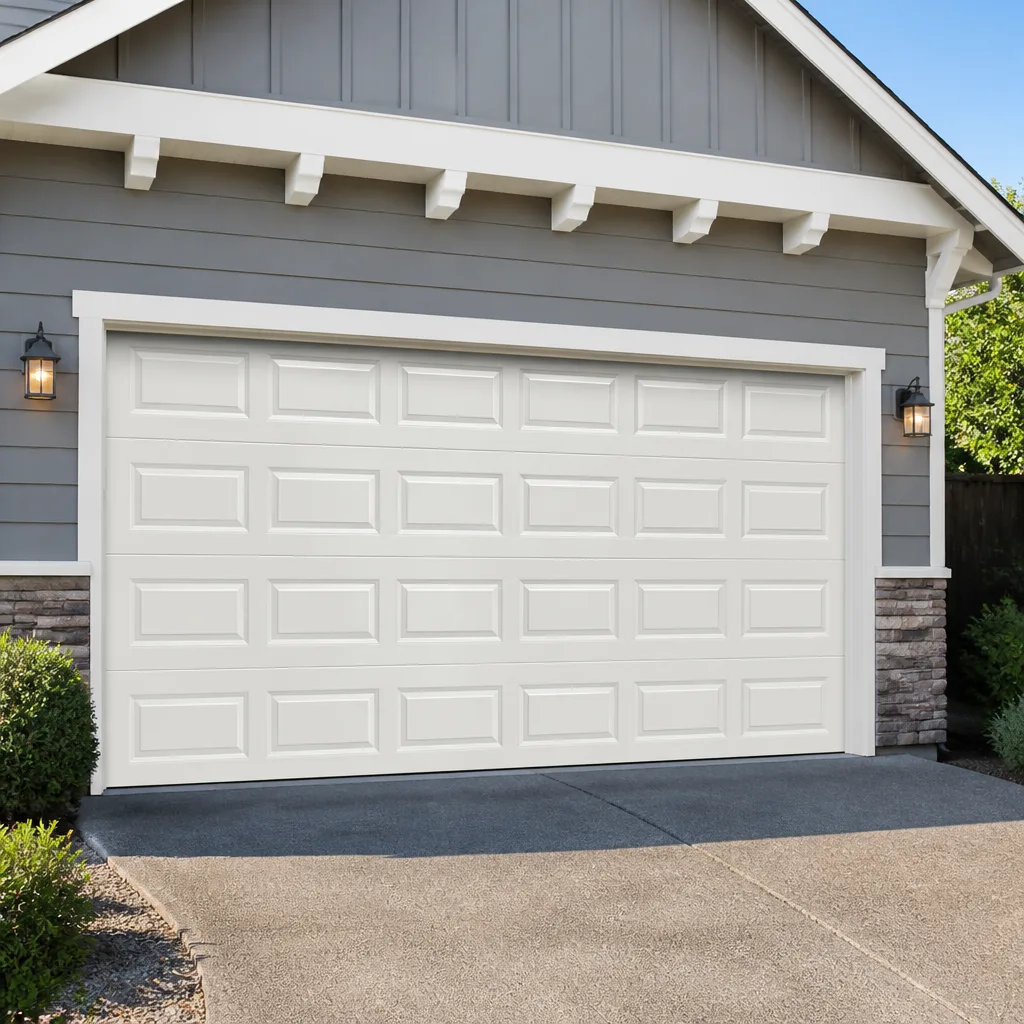 Raised-panel steel
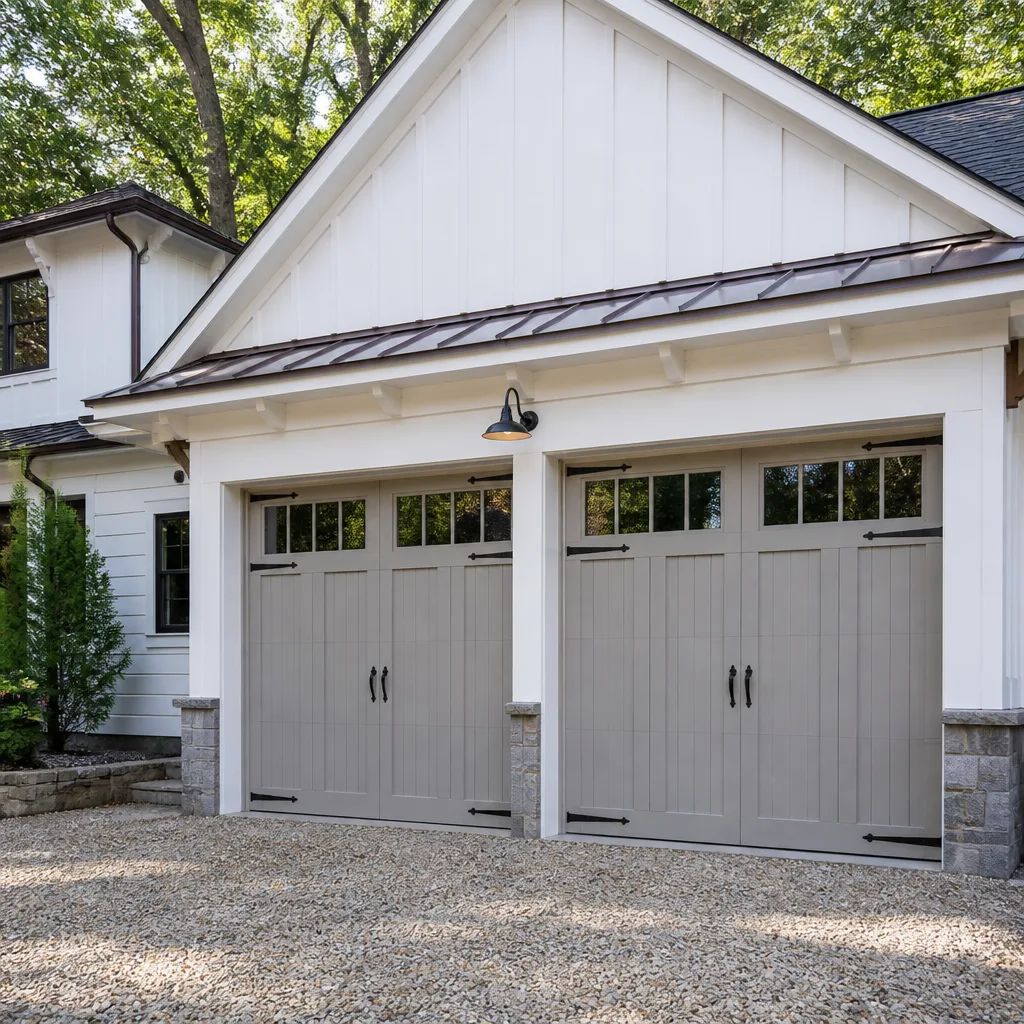 Carriage house
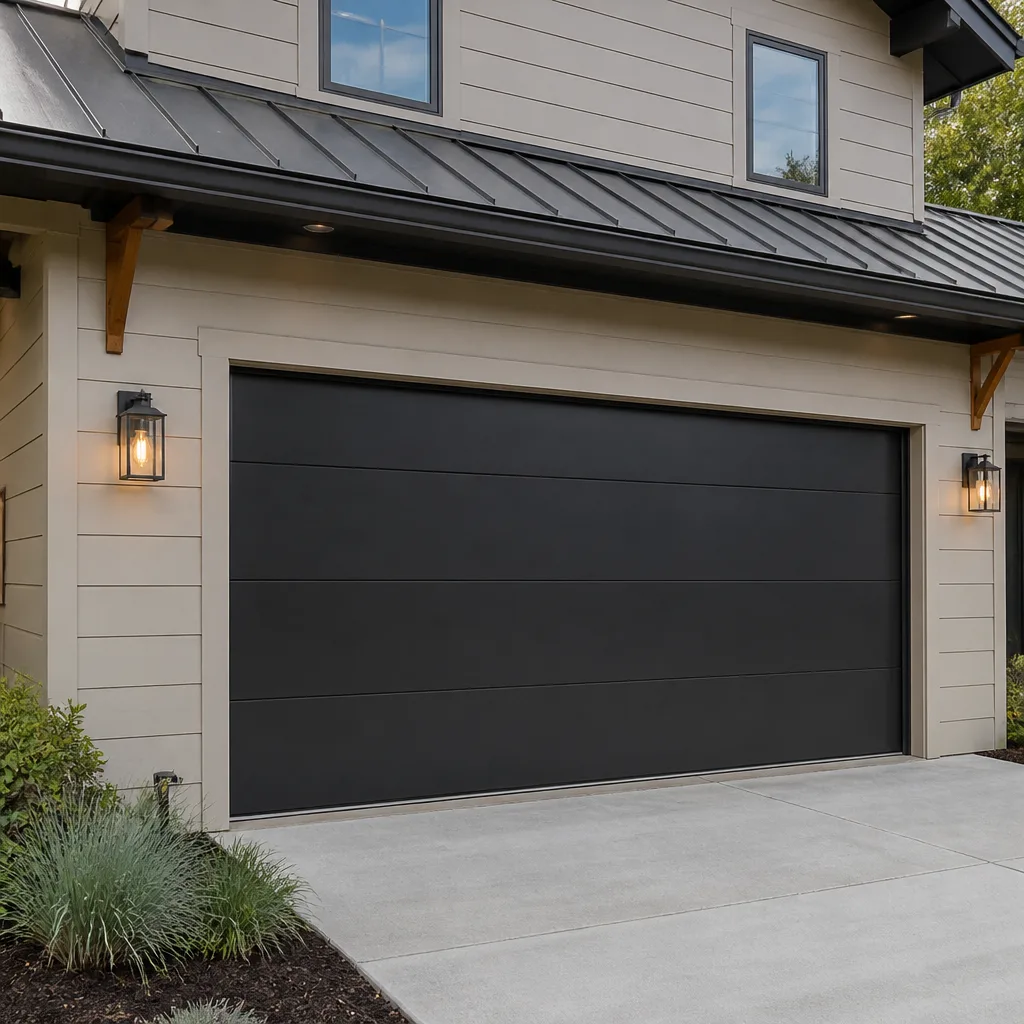 Modern flush
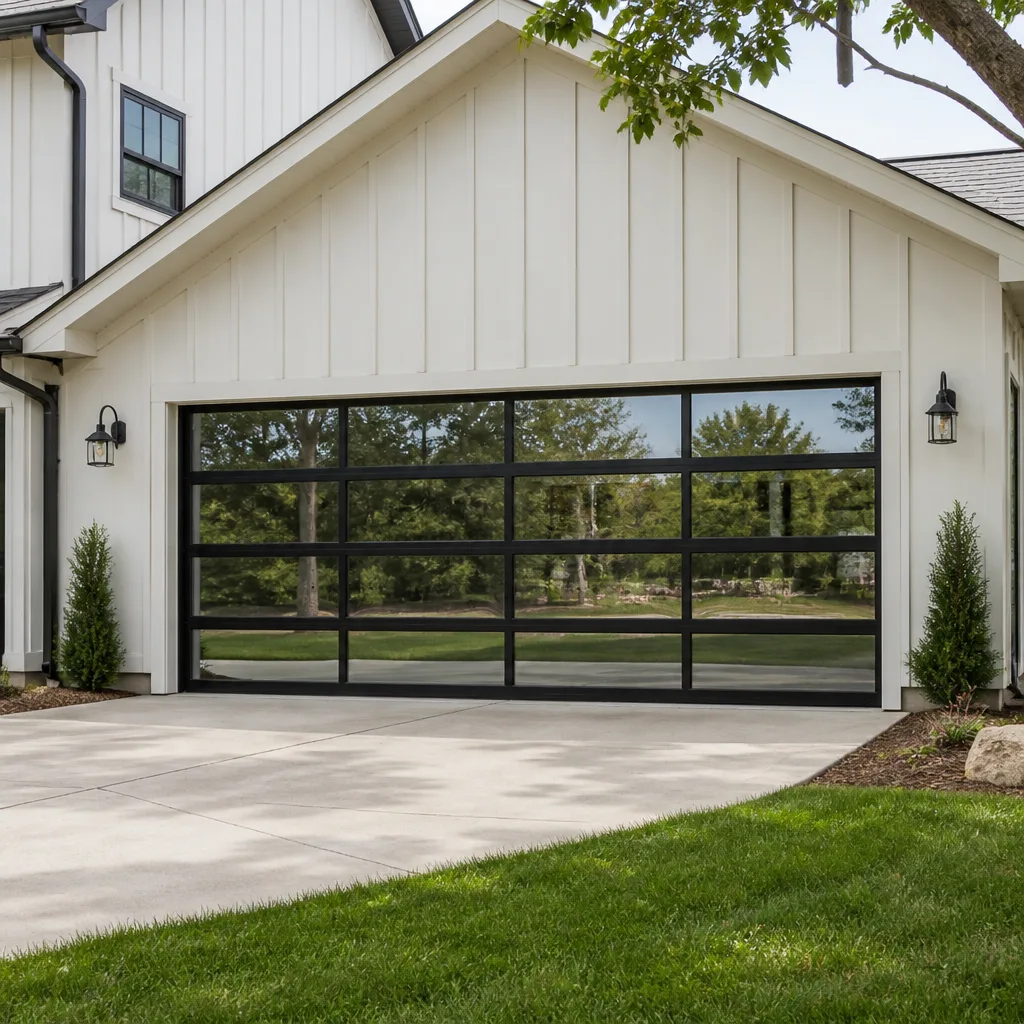 Full-view glass
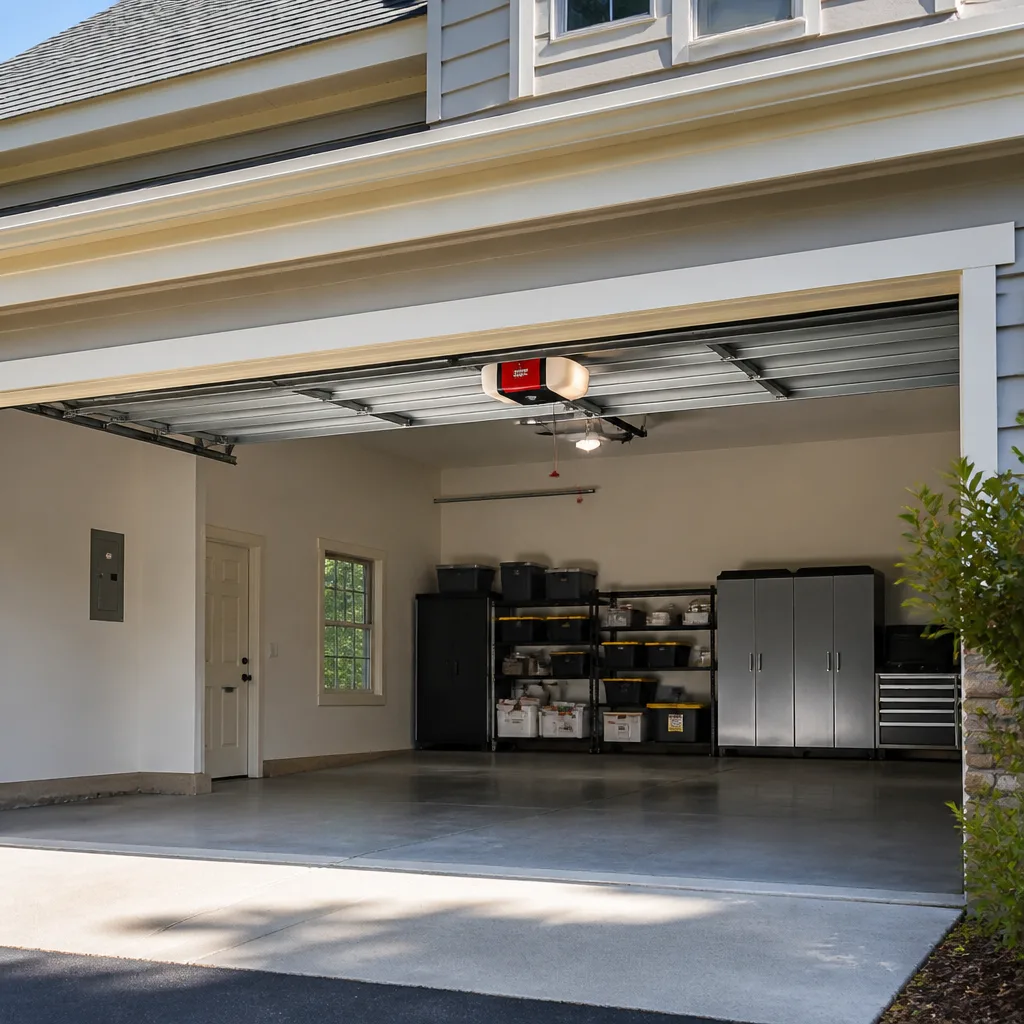 LiftMaster openers
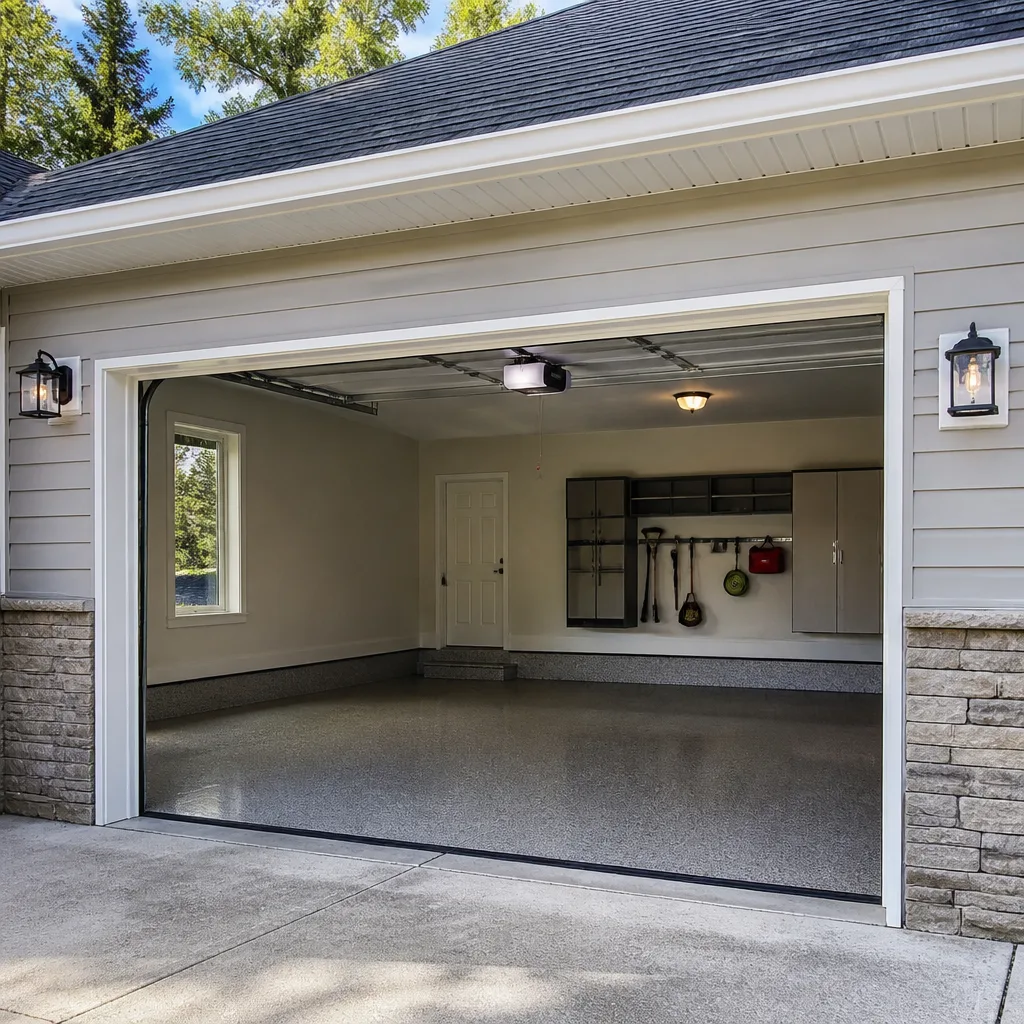 Chamberlain openers
Full 25-point door and opener safety check with every visit - springs, cables, rollers, tracks, and your LiftMaster or Chamberlain opener included
You get a price before we start. It does not change when the pro arrives.
Get your free estimateHow to Hire a Garage Door Contractor in Bakersfield: A Step-by-Step Guide
Most homeowners hire a garage door contractor the same way they hire a plumber: call the first company that answers, describe the symptom, and accept the diagnosis. That works fine for a dripping faucet. It fails for a garage door, because the door and the opener are two systems that fail in different ways, and a lot of companies in Bakersfield are set up to handle only one of them. The tell comes after the work, not before: a spring gets replaced, and then you hear “we don’t handle openers.” That’s a second company, a second call, and a second invoice for a job that should have been closed out in one visit.
This guide walks through what to ask before you book, what California licensing actually looks like for this trade, where the local market goes wrong, and how to read two quotes side by side when the companies don’t itemize the same way. By the end you’ll know how to pick a contractor who can see the whole door system and say so plainly.
Quick Answer
Hiring a garage door contractor in Bakersfield comes down to verifying three things before anyone shows up: that the company is licensed in California under the right specialty classification, that it services both the door hardware and the opener as one job, and that it itemizes parts and labor separately in a written quote. A contractor who can’t answer all three clearly on the phone is a single-trade shop that will hand off half your repair. Ask for the classification, ask which opener brands they service, and ask for the estimate in writing before work starts.
Styles & brands we work with
- Raised-panel steel
- Carriage house
- Modern flush
- Full-view glass
- LiftMaster openers
- Chamberlain openers
Table of Contents
- What Should You Ask Before Booking a Garage Door Contractor in Bakersfield?
- What Does Legitimate Licensing Look Like for Garage Door Work in California?
- What Are the Red Flags Specific to the Bakersfield Market?
- How Do You Compare Quotes When Companies Itemize Differently?
- What Does a Fair Labor Rate Look Like for Kern County in 2026?
- Why Does Multi-Brand Experience Matter for Opener Work?
- Why Is the Spring the Most Dangerous Part of the Job?
- How Do You Verify a Contractor Before the Technician Arrives?
What Should You Ask Before Booking a Garage Door Contractor in Bakersfield?
The phone call is where you learn the most, and it costs you nothing. A contractor who handles the full door system can answer these questions without hedging. One who can’t will usually tell you so within a minute. That’s useful too.
- “Do you repair openers, or only doors?” This is the single most revealing question. Opener work involves a different set of skills than panel, track, and spring work, and a lot of shops outsource it or decline it outright. If the answer is “we do doors,” you know the opener is your problem.
- “Which opener brands do you service?” A competent answer names specific manufacturers. A vague answer like “all brands” usually means the technician will look it up on arrival.
- “Are you licensed, and under what classification?” You want the classification number, not just “yes.” More on this below.
- “Will the estimate be in writing before work starts?” The right answer is an immediate yes. The price gets quoted and agreed before anyone touches the door.
- “Do you itemize parts and labor separately?” If the answer is a single number, you can’t compare it to another quote, and you can’t tell whether you’re paying for a better-grade spring or the same cheap one marked up.
- “Who actually does the work?” You’re asking whether the company you called performs the work itself or passes it to a subcontractor you’ve never spoken to.
Write the answers down. If you’re calling three companies, you’ll want the side-by-side. In our experience, the companies that can answer all six without pausing are the ones that show up and finish the job on the first visit.
None of this is about speed. It’s about whether the contractor understands your door as one system with several failure points. A torsion spring, a bent track, a stripped gear in a chain-drive opener, and a failing safety sensor all produce “the door won’t close” from the driver’s seat. They have nothing else in common.
What Does Legitimate Licensing Look Like for Garage Door Work in California?
Garage door installation and repair is a specialty trade in California, and the license that covers it falls under the Contractors State License Board. The classification you’re looking for is C-61, which is the general specialty category, with a D-28 designation inside it for doors, gates, and related hardware. A contractor doing this work legitimately will hold that classification or a comparable one and will give you the license number when you ask, without working around the question.
Here’s what to do with the number once you have it:
- Look it up yourself. The CSLB maintains a public license lookup. You can confirm the classification, whether the license is currently active, and whether there’s any disciplinary history attached to it. This takes about two minutes.
- Check that the classification matches the work. A general building contractor can legally take a broad range of jobs, but a specialty classification tells you the company’s actual trade. For garage doors, that’s the C-61/D-28.
- Confirm the business name on the license matches the name on the quote. If you called “Smith Garage Doors” and the paperwork says “ABC Installations LLC,” ask why. Sometimes there’s an honest answer. Sometimes there’s a handoff.
- Ask about insurance separately. A license and insurance are two different things. A licensed contractor should also carry general liability coverage, and a company that’s insured and bonded will tell you so without being pushed.
Any contractor who gets defensive about a license lookup is telling you something. The legitimate ones expect the question and usually appreciate that you asked, because it separates them from the unlicensed operators who undercut on price and disappear when something goes wrong.
One more note: the license protects you on the installation side as much as the repair side. A new door that’s hung out of square, a torsion system tensioned to the wrong spec, or an opener mounted to a header that can’t carry the load are all problems that surface months later. The license is your recourse when they do.
What Are the Red Flags Specific to the Bakersfield Market?
Bakersfield has a garage door market with a few patterns worth knowing before you dial. None of them are unique to this city, but the mix here is particular: a large stock of older homes with original doors and openers, a steady flow of new construction on the edges, and enough distance between neighborhoods that a company promising to be everywhere is worth a second look.
Out-of-area call centers
You call a number that looks local, and you get a dispatcher who can’t tell you which side of town they’re working in today. These operations book the job and route it to whichever subcontractor is available. The technician who shows up may be excellent, but you have no way to know that in advance, and the company you’re paying isn’t the company doing the work. Ask a simple question: “What part of Bakersfield are you dispatching from?” A local operation will answer directly. A call center will pivot.
Bait-and-switch spring pricing
Springs are the most common repair and the easiest thing to quote low over the phone. The advertised price is for one spring, or for a lower-grade spring, or it doesn’t include labor. Then the technician arrives and the number changes. The fix is straightforward: ask for the estimate in writing, ask whether the quoted price is for one spring or a matched pair, and ask what grade of spring is included. A matched pair is usually replaced together, so a pair costs about twice a single-spring price. Any company that won’t put the price in writing before the visit is one to skip.
“Door-only” companies that upsell opener work
This is the pattern that costs people the most over time. A company that does door work takes the opener job anyway, then either struggles with it or replaces the whole unit when a component repair would have done. If a contractor’s answer to “do you service openers” is vague, and their answer to “what’s wrong with my opener” is “you need a new one,” get a second opinion.
Pressure to replace when repair would hold
A door with a bent bottom panel and a worn roller doesn’t need to be replaced. Neither does an opener with a failed capacitor. A contractor who leads with replacement on a repairable system is selling, not diagnosing. Ask directly: “What’s the repair option, and what would it cost?” If there isn’t a straight answer, that’s your answer.
How Do You Compare Quotes When Companies Itemize Differently?
Two quotes for the same repair can differ by hundreds of dollars and still both be fair, because they’re not quoting the same scope. One includes a matched pair of springs and new cables. The other includes one spring, reuses the cables, and adds a trip charge on top. Comparing the bottom-line numbers tells you nothing.
Here’s how to line them up:
- Put both quotes into the same categories. Parts, labor, and any other line items. If a quote is a single number, ask the company to break it down. A contractor who won’t break it down is telling you they’d rather you didn’t compare.
- Check the parts spec. For springs, ask the cycle rating. For openers, ask for the model number. For panels, ask the manufacturer and the series. A quote that names the part is a quote you can hold someone to.
- Note what’s included in labor. Disposal of the old door or springs, hauling, balancing, and safety-reverse testing after the install. Some companies bundle these, some charge separately. Both are fine as long as you know which you’re getting.
- Look for the written-estimate guarantee. The price you agree to before work starts is the price you pay. If a company’s quote has language that lets the number move once the door is apart, get that clarified in writing before you book.
- Compare the warranty separately. Parts warranty and labor warranty are different things, and they’re often different lengths. Ask for both.
When the scopes line up, the price difference usually reflects parts grade and labor rate, not markup. That’s the comparison you actually want to make. If you’re doing repair work and want a benchmark for what the line items should look like, our garage door repair page breaks down how a typical job is priced. The written estimate always sets the final number, whatever the range looks like going in.
What Does a Fair Labor Rate Look Like for Kern County in 2026?
Garage door labor in Kern County runs higher than rural parts of the Central Valley and lower than the coastal metros, which is what you’d expect from the local cost of living. A fair rate covers a trained technician, the time the job actually takes, and the overhead of running a licensed, insured business. What it shouldn’t include is a mystery number that appears on the invoice after the work.
The practical way to evaluate a labor rate isn’t to find the lowest hourly figure, it’s to see how the labor maps to the job:
- A spring replacement is a defined job. Ask for the all-in price, not an hourly rate. The labor on a straightforward torsion spring swap on a standard door should be a known quantity to any competent shop.
- Opener diagnostics are a different animal. The technician has to isolate whether the problem is in the opener, the safety sensors, the wiring, or the door’s balance. Ask whether the diagnostic is a separate charge and what happens to that charge if you proceed with the repair.
- Installation is measured in scope, not hours. A single-car door on an existing track is not the same job as a double door with a new opener and fresh hardware. A written quote should reflect the difference.
- Bakersfield-specific wear affects the labor estimate. Doors in the valley see a lot of summer heat, and heat ages springs, rollers, and opener components faster than a mild climate would. A technician quoting a job here should be looking at the whole system for heat-related wear, not just the part that failed.
If a quote’s labor line looks unusually low, go back and check the parts line. A cheap install often means builder-grade hardware that will need replacing sooner. That’s not a savings, it’s a deferral. And if a quote’s labor looks unusually high, ask what’s included that the other quotes left out. Sometimes it’s disposal and balancing. Sometimes it’s nothing.
For pricing on the opener side specifically, our garage door opener repair page lays out how a typical diagnostic and repair is structured.
Why Does Multi-Brand Experience Matter for Opener Work?
Openers are not interchangeable. A chain-drive Craftsman from the 1990s and a current Wi-Fi-enabled LiftMaster have almost nothing in common beyond the wall button. Different gear trains, different logic boards, different safety-reverse systems, different travel-limit adjustments, and in the newer units, different firmware and app pairing. A technician who works on one brand fluently can still be lost inside another manufacturer’s housing.
That matters for two reasons. The first is diagnostic time. A technician who knows the specific model goes straight to the known failure points instead of testing every component in sequence. The second is parts. Manufacturer-specific components, whether that’s a Chamberlain logic board or a Raynor-specific opener bracket, have to be matched to the unit. Generic substitutes either don’t fit or fail early.
How do you verify brand experience before the technician arrives?
- Ask which brands they service and listen for specifics. A company that works on LiftMaster, Chamberlain, Genie, and Craftsman as a matter of routine will name them without prompting. If you get a list read back to you from a script, that’s a different signal.
- Ask whether they work from the manufacturer’s specifications. Brand-matched work means the technician follows the manufacturer’s actual service procedure, not a generic routine. This matters most on safety-reverse adjustment and force-limit settings, where the wrong number is both a malfunction and a safety issue.
- Ask about your specific model number. It’s on a label on the motor housing. A company that services your brand will usually recognize the model and be able to tell you the common failure points on that unit.
- Ask about smart and Wi-Fi-enabled openers separately. These are a newer generation, and the pairings, firmware, and app integration are their own skill set. A company that only handles legacy systems will say so, or will take the job and struggle.
We’re trained on eight leading garage door and opener brands, including LiftMaster, Chamberlain, Clopay, Amarr, Wayne Dalton, Craftsman, and Raynor, so the opener on your ceiling is one we’ve seen before. Our technicians have up to 12 years of experience. That’s the standard you’re looking for, whatever company you call.
Why Is the Spring the Most Dangerous Part of the Job?
The torsion spring above your garage door holds the door’s entire weight under tension, and it’s the component homeowners should never attempt to adjust, remove, or replace. The stored energy in a wound torsion spring is enough to cause serious injury in an instant, and the tools used to wind and unwind it are specialized for that reason. There’s no safe shortcut here, and no homeowner-grade workaround.
What you should know as a homeowner, without touching anything:
- One loud bang followed by a door that won’t lift usually means a broken spring. Don’t try to force the door open. The opener will strain against the full weight and may damage itself in the process.
- A door that lifts a few inches and stops can be a spring, a cable, or a balance issue. All three are professional territory.
- A crooked door often means one spring or cable has failed while the other is still carrying load. That’s a dangerous state. Leave it closed and call.
- Never wind or unwind a torsion spring by hand, and never substitute a tool that wasn’t made for the job. The springs are under constant tension until they’re properly released, and a release that goes wrong doesn’t give you a warning first.
The good news is that spring replacement is one of the most predictable jobs in the trade. A trained technician releases the tension, swaps the spring or matched pair, resets the balance, and tests the safety reverse before leaving. If you’re not sure whether your symptom is a spring or something else, call (833) 436-2460. We answer 24/7. Estimates are free, and there’s no charge for telling you what you’re looking at.
Bakersfield’s summer heat does shorten spring life, so a door on a south-facing wall may go through springs faster than the same door on a shaded side. If you’ve had a spring fail, it’s worth having the technician look at the other one while they’re there. That’s the kind of full-system check that saves a second visit.
How Do You Verify a Contractor Before the Technician Arrives?
Verification is a ten-minute process, and it’s the difference between hiring a contractor and hoping you hired one. Do it before you give the company your address, not after.
- Look up the license number on the CSLB site. Confirm the classification, the active status, and the business name. If the license is expired or the classification doesn’t cover garage door work, stop there.
- Search the business name and the license number together. If the company operates under multiple names, or if the license belongs to a different entity entirely, ask why before you book.
- Ask for the estimate in writing before any work begins. The written estimate should specify the parts, the labor, and the total. Once you agree to that number, that’s the price. No surprise invoice after the door is apart.
- Confirm the scope covers the full system. If you have a door problem and an opener problem, both should be on the same estimate. Splitting them across two companies costs you a second call and a second trip.
- Ask what happens if the diagnosis changes once the door is opened up. A professional will tell you that they’ll stop, explain the change, and get your approval on a new written number before proceeding. A company that just fixes what it finds and bills for it later is a red flag.
- Confirm the service window. We answer 24/7, with fast dispatch from 7am to 7pm, Sunday through Friday. Any company you call should tell you plainly when a technician can actually be at your door.
For a broader picture of the local landscape, the Bakersfield page covers how service works in this area. And if you want to know what a company that handles the full door system looks like on paper, that’s Saddle Garage Door Repair.
Common Mistakes to Avoid
- Booking on price alone. The lowest written number is usually the lowest scope, not the best deal. A quote that’s $80 cheaper because it covers one spring instead of a pair isn’t a savings.
- Skipping the license check. California has a public lookup for a reason. Two minutes on the CSLB site tells you whether the contractor is licensed, and what for, without a single phone call.
- Accepting a verbal estimate. If the price isn’t in writing, you don’t have a price, you have a conversation. Get it in writing and get the parts specified.
- Hiring a door-only company for an opener problem. This is the mistake that costs the most in Bakersfield, because the handoff usually means a second service call. Ask the question up front and skip the middle step.
- Letting a technician replace the whole opener when a component repair would do. Failed capacitors, stripped gears, misaligned safety sensors, and snapped belts are all repair jobs on most units. Ask for the repair option before agreeing to a replacement.
- Ignoring the second spring. Springs are usually installed as a matched pair and tend to fail close together. If one has broken, have the other inspected in the same visit, because the next one is on its way out.
- Forgetting the safety-reverse test. After any repair or install, the technician should test that the door reverses when it meets an obstruction. If they pack up without that test, ask for it before they leave. It’s a five-second check and it matters.
One Bakersfield-specific note: older homes often have openers from the 1980s and 1990s that lack modern safety features, and a repair visit is a good time to have the unit’s age and safety systems assessed. Nobody needs to be talked into a replacement on the spot. You just want to know what you’re working with.
See the difference
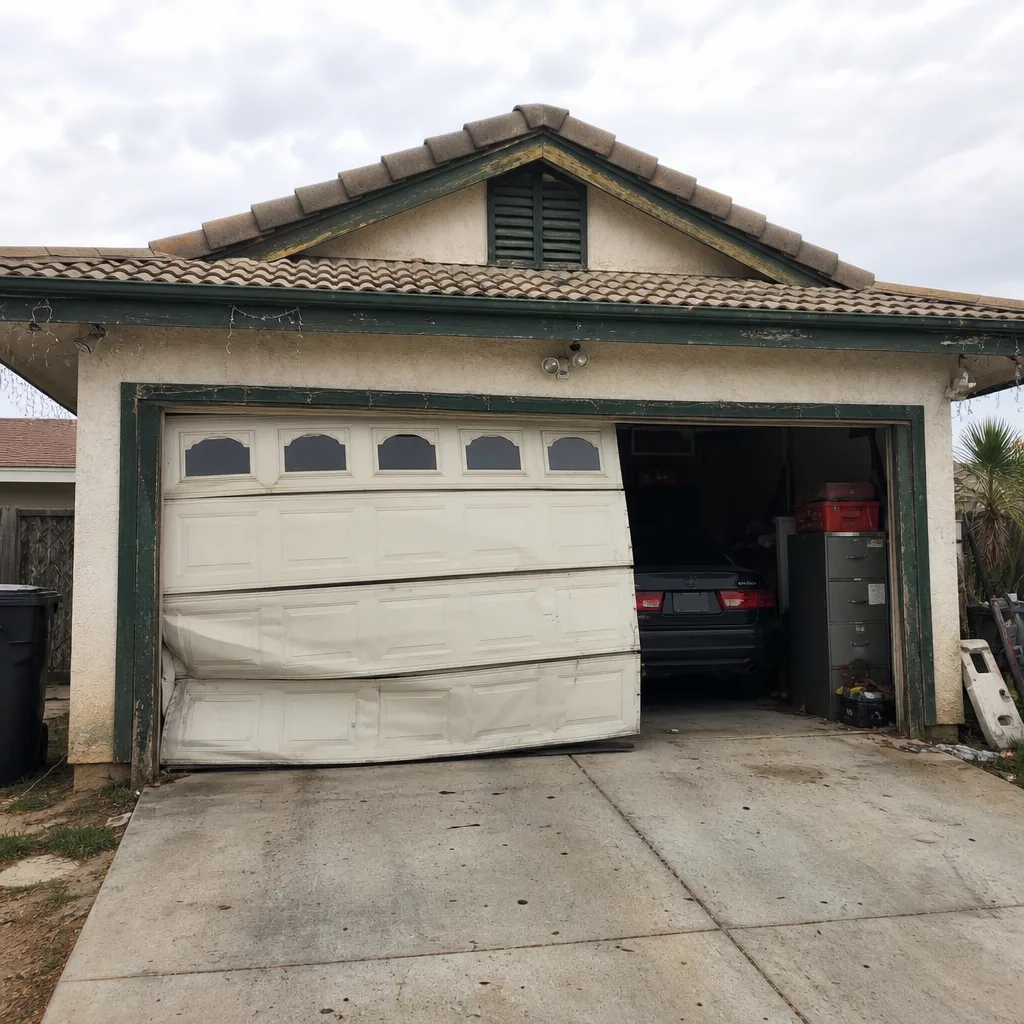 Before
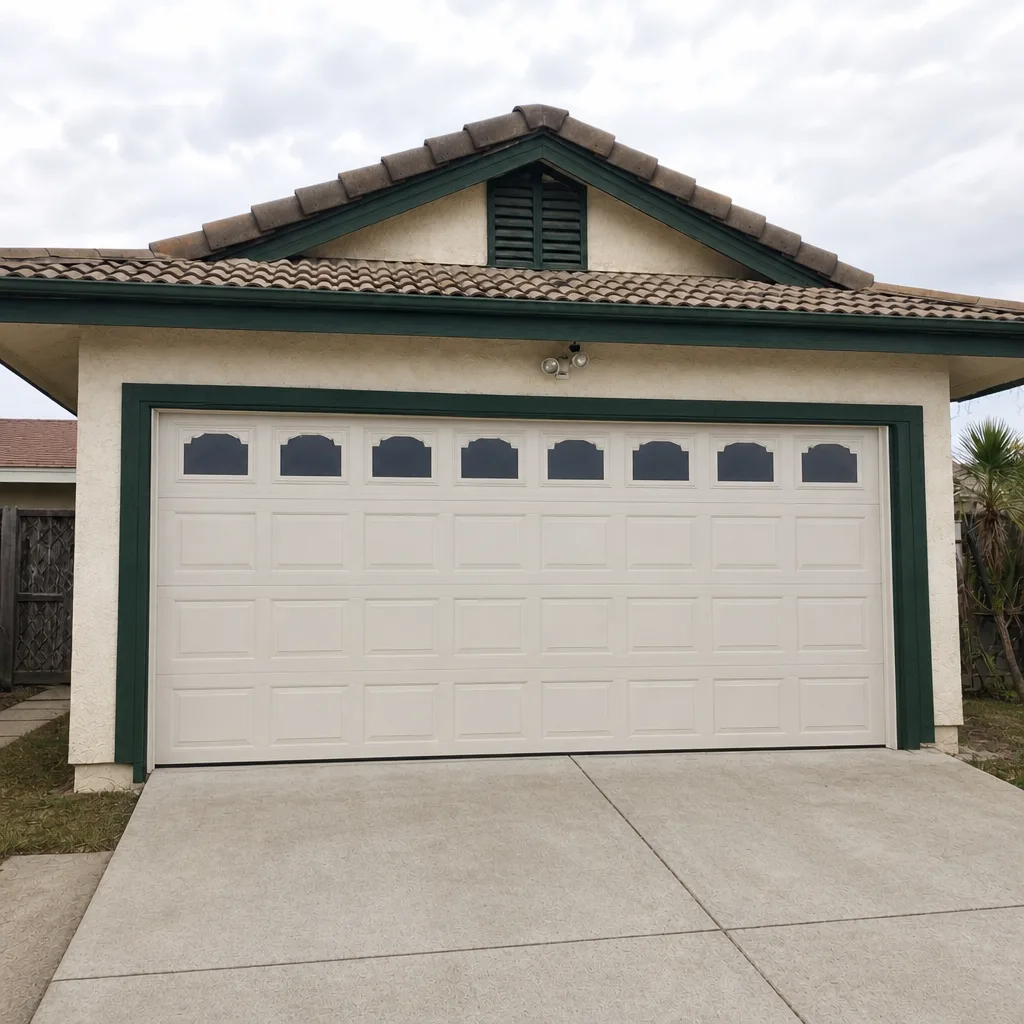 After
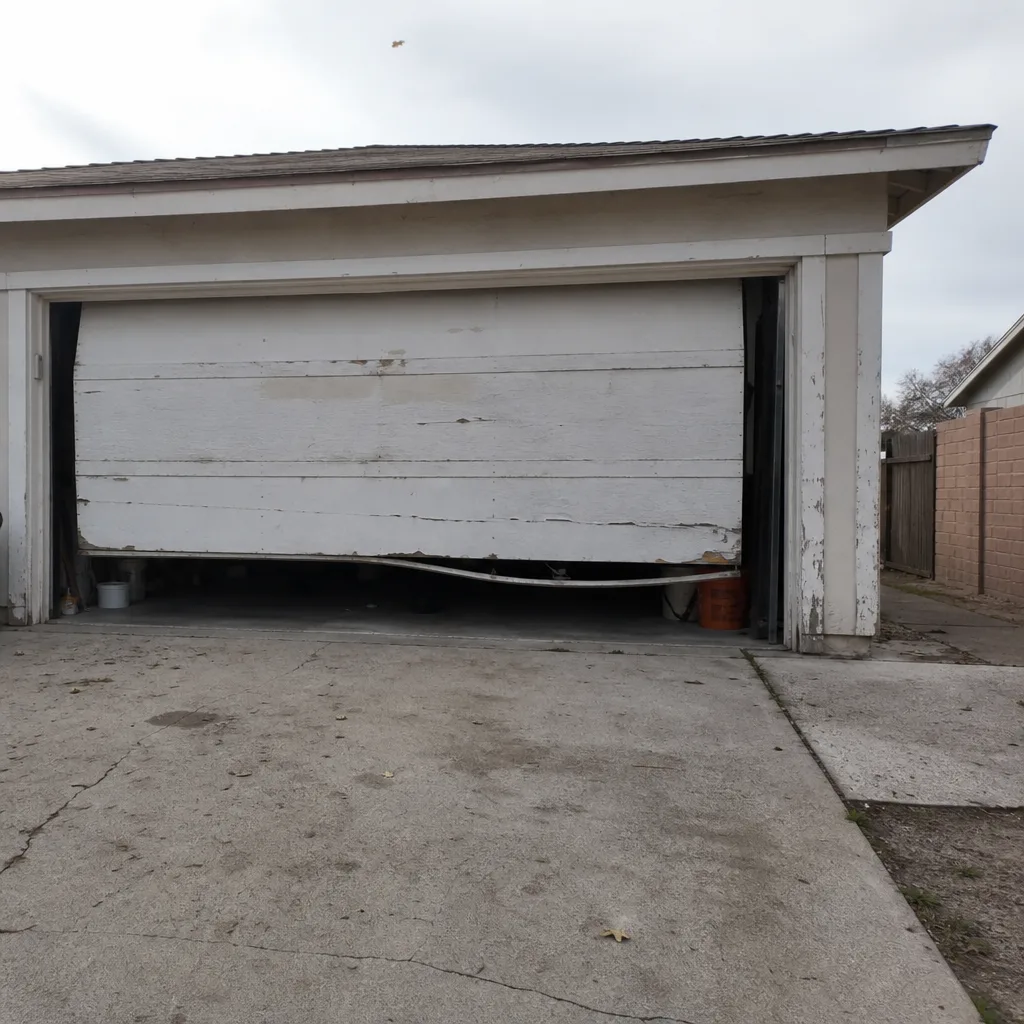 Before
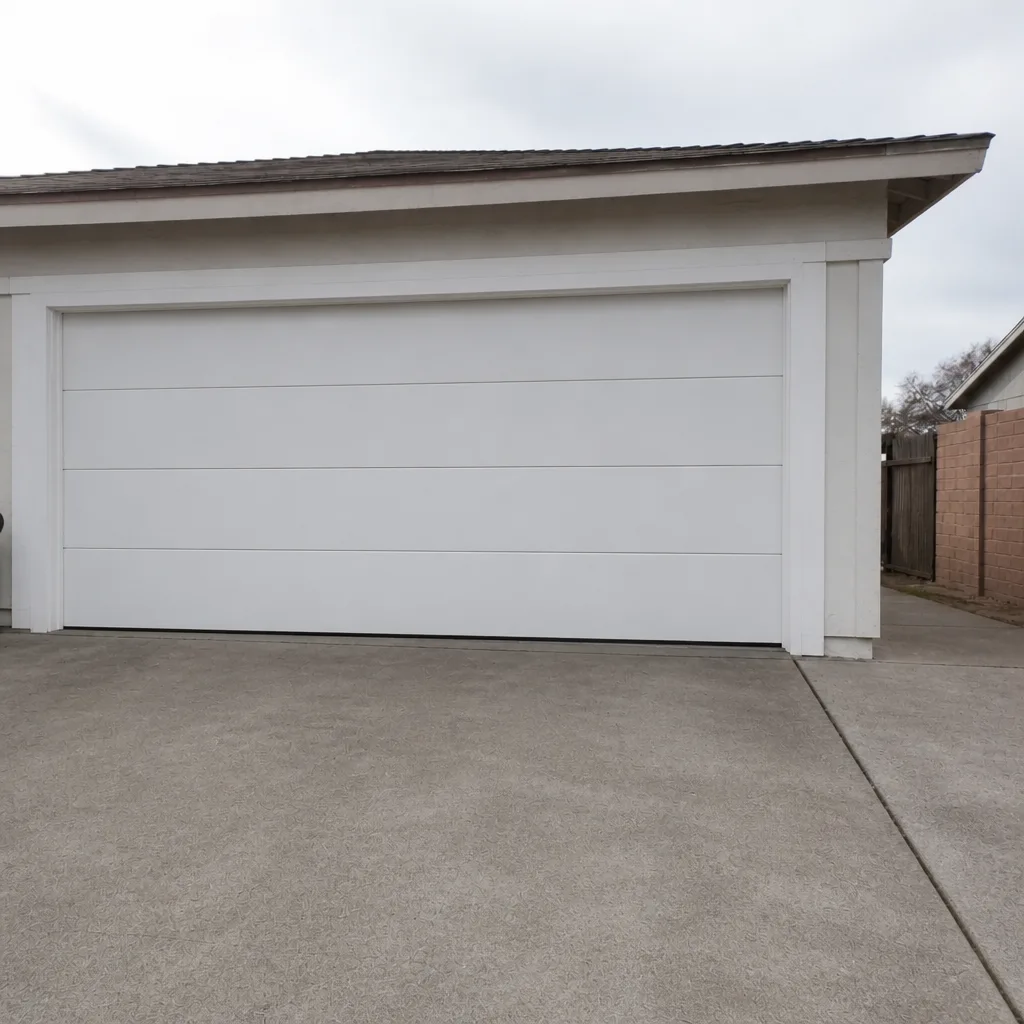 After
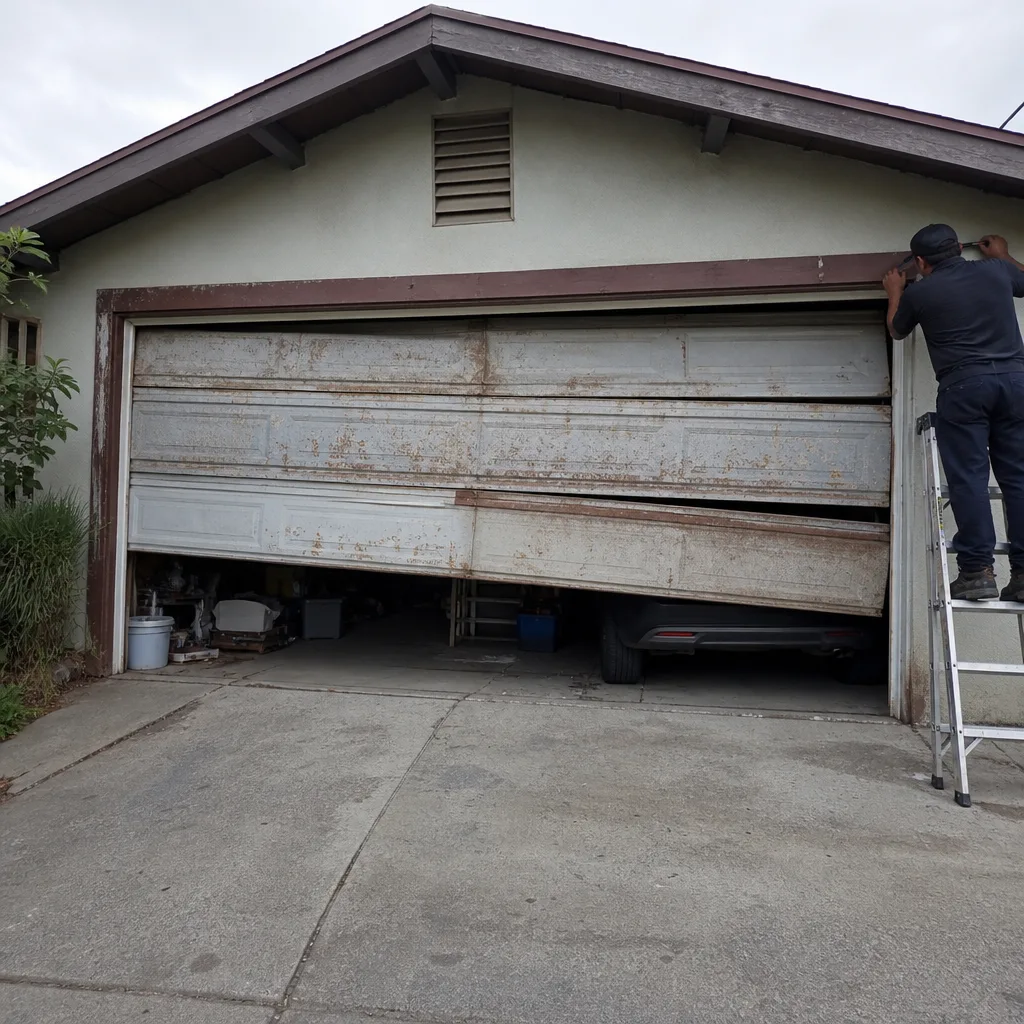 Before
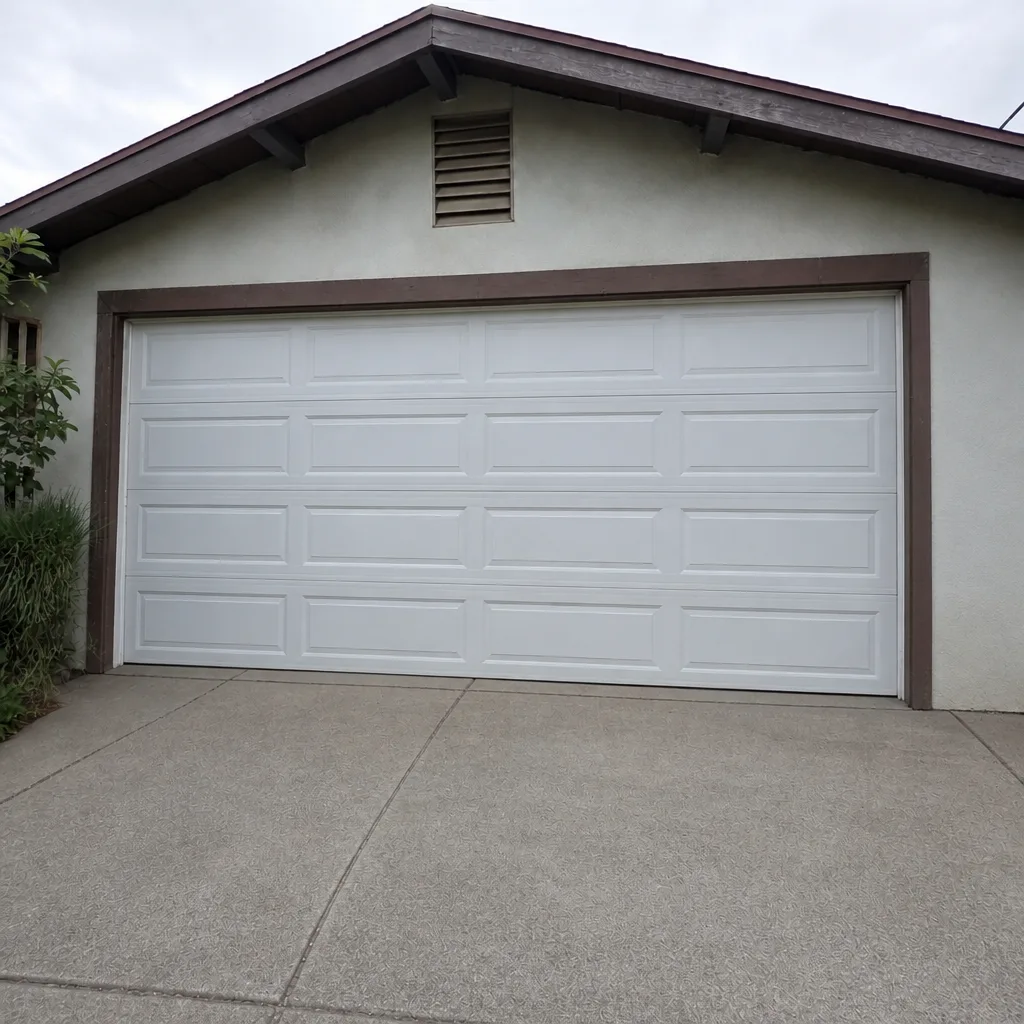 After
When to Call a Professional
Most garage door problems are not homeowner jobs, and a few are genuinely dangerous. A loud bang from above the door followed by a door that won’t lift means a torsion spring has failed, and that’s a professional-only repair. A door that’s crooked, a cable that’s come off its drum, a door that slams shut instead of lowering smoothly, or an opener that runs but doesn’t move the door are all cases to hand off. If a door has gone off its track even slightly, don’t cycle it, because the next attempt can bend panels and turn a repair into a replacement.
Opener problems are usually safer to investigate for a minute but still worth a call: a unit that hums without moving, a safety sensor that won’t align, a wall button that no longer responds, or a remote that’s stopped pairing after a power outage. And any door with a broken panel, a bent bottom section, or a hinge that’s pulling away from the door should be looked at before further use.
Saddle Garage Door Repair offers free estimates in Bakersfield. Call (833) 436-2460. We answer 24/7, with fast dispatch from 7am to 7pm, Sunday through Friday.
Frequently Asked Questions
Ask for the license number and check it yourself on the California Contractors State License Board lookup, which is public and takes about two minutes. For garage door work, look for the C-61 specialty classification with the D-28 designation, and confirm that the business name on the license matches the name on your quote. A licensed contractor will give you the number without hesitation, and a legitimate company should also carry general liability insurance, which is a separate question worth asking on its own.
Some can and many can’t, which is exactly why the question is worth asking before you book. The door system has two halves: the door hardware (springs, cables, rollers, tracks, panels) and the drive unit (the opener and its controls). A full-system company handles both on one visit. A door-only shop will fix the door and hand off the opener, which means a second call and often a second diagnosis fee. Ask “do you repair openers” and listen for a specific yes.
Because the quotes usually cover different scopes, not because one contractor is gouging you. One estimate may cover a matched pair of springs with new cables; another may cover a single spring and reuse the cables. Always ask for a written, itemized estimate that names the parts and separates labor, then compare the scopes line by line. The written estimate sets the final price, so the number you agree to before the work starts is the number you pay.
Most opener problems are repairable, including failed capacitors, stripped gears, snapped belts, and misaligned safety sensors, especially on units from brands like LiftMaster, Chamberlain, Craftsman, and Genie. Replacement makes more sense when the unit is very old, lacks modern safety features, or has failed in a way that puts a logic board at the center of the repair. Ask for both numbers: the repair cost and the replacement cost. A contractor who only quotes the replacement hasn’t given you a choice.
A door that won’t lift, lifts a few inches and stops, or hangs crooked usually points to a spring or cable failure, and those are professional-only repairs because the torsion system is under extreme tension. Other signs worth a call: a door that slams closed, an opener that hums without moving the door, panels that are pulling away from the hinges, and a safety reverse that no longer works when tested. Don’t cycle a door that’s off its track, because it can damage panels and make the repair bigger.
Dispatch runs 7am to 7pm, Sunday through Friday, and repairs are often handled same-day depending on the schedule. Call (833) 436-2460 and we’ll tell you honestly when a technician can be at your door. We answer 24/7, and a call outside dispatch hours is booked into the next opening, Sunday through Friday, 7am to 7pm. Installation and new-door work is measured and scheduled separately, since the door has to be ordered to spec.
The Bottom Line
Hiring a garage door contractor in Bakersfield comes down to a short checklist: verify the C-61/D-28 license on the state lookup, ask whether the company services both the door and the opener, and insist on a written itemized estimate before anyone touches the door. Compare quotes on scope, not on the bottom-line number, because a cheaper quote is usually a narrower one. Springs are professional-only work, and no one should be winding one by hand. The contractor who answers your six questions on the phone without hedging, names specific brands, and puts the price in writing is the one to hire, whether that’s us or someone else.
If you’d rather skip the search, call (833) 436-2460 for a free estimate. We work on the full door system, from the springs and panels to the opener and drive unit, and we service eight leading brands, so the equipment on your ceiling is one we already know. We answer 24/7, with fast dispatch from 7am to 7pm, Sunday through Friday. The price gets quoted and agreed before any work starts.
Written by the team at Saddle Garage Door Repair.